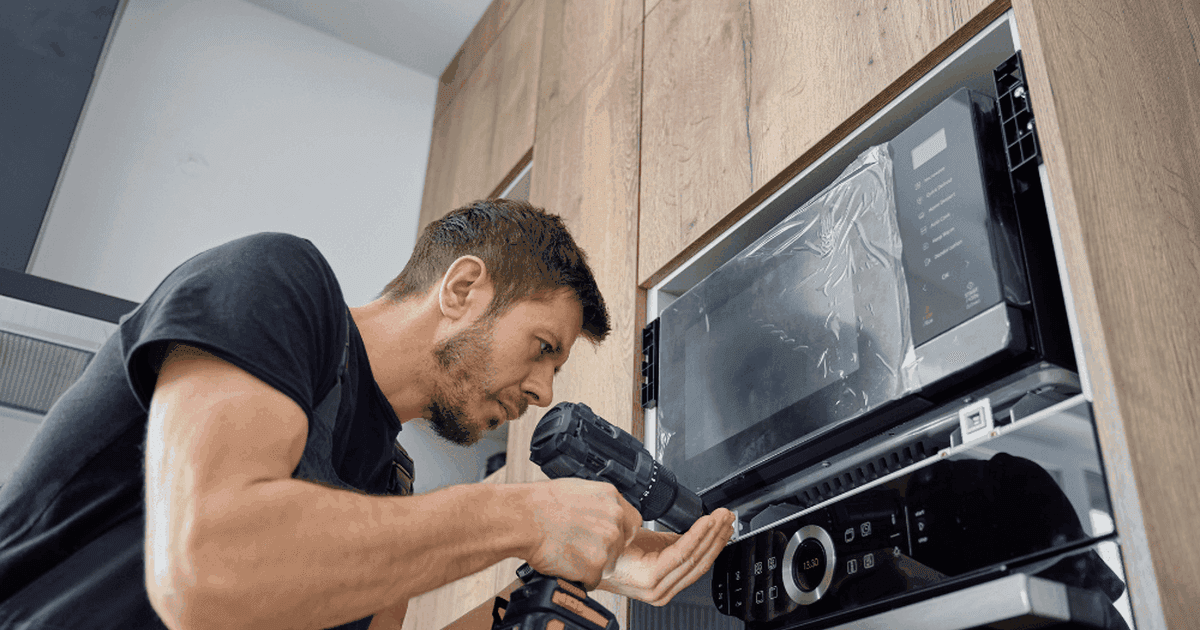
A Miele display doesn't just stop working and go quiet. It tells you something — an F-number, a plain-English message, a flashing "dE," a code you've never seen before — and then it waits for you to either fix the problem or call someone who can. That's genuinely useful, once you know how to read it. Most people don't, and end up either ignoring a code that matters or paying for a technician visit that a two-minute filter clean would have solved.
This guide covers every Miele appliance category in one place: washing machines, dishwashers, dryers, induction hobs, coffee machines, refrigerators, wine coolers, and vacuum cleaners. Most sites covering Miele faults pick one or two appliance types and stop there, which means if you've got a Miele kitchen — washer, dishwasher, oven, hob, coffee machine, all from the same brand, which is common once a household commits to it for one appliance and sticks with it for the rest — you're bouncing between four or five different pages to figure out what's actually wrong in your house. This is the version that doesn't make you do that.
For each code or fault pattern below, you'll get what it actually means, what you can check yourself before calling anyone, and roughly where it sits on the cost scale if it does need a technician. Pricing here reflects the UAE market specifically, not the US or UK numbers most of this content gets written for.
How Miele's Error System Actually Works
Miele appliances don't fail silently, and they don't let you "just ignore it and hope." The control board runs a continuous self-check, and when a sensor reading, a timing window, or a safety interlock falls outside its expected range, the display shows a code instead of continuing the cycle. Clear the code without fixing the underlying cause, and it comes back — often within the same cycle.
There are three code formats you'll run into, and which one you see depends on the appliance generation, not the fault itself:
- F-codes (F11, F70, F138, and so on) — the classic format, used across most washing machines, dishwashers, and dryers regardless of age.
- Plain-English messages — newer W1-generation washing machines and dishwashers with full LCD displays show "Check water intake," "Check drain," or "Waterproof system" instead of a bare number. These map to the same underlying F-codes; Miele just decided actual words are more useful than a number nobody has memorized.
- Letter codes — hobs and coffee machines use their own short codes: "dE" for demonstration mode, "LC" for the child lock, "Err" paired with a number for hob-specific faults.
One practical habit before anything else: if a cycle stops and a code appears, take a photo of the display with your phone immediately. Some codes clear themselves once the machine finishes draining or resets, and you'll want the exact code when you're troubleshooting or calling for service, not "it was an F-something."
Miele Washing Machine Error Codes
Miele washing machines run either an F-code LED display (W Classic models) or plain-English LCD messages (W1 series). Both point to the same handful of failure areas.
| Code / Message | What It Means | Typical Cause |
|---|---|---|
| F10 / "Check water intake" | Water intake fault | Closed supply valve, kinked inlet hose, blocked inlet filter |
| F11 | Drainage fault | Blocked pump filter, kinked drain hose |
| F16 | Excess detergent detected | Overdosing, or a TwinDos/CapDosing cartridge dispensing incorrectly |
| F20 | Heater fault | Failed heating element or thermostat |
| F51 | Pressure sensor fault | Water level sensor malfunction |
| F53 | Speed sensor fault | Drum speed sensor or wiring issue |
| F63 | Door lock fault | Worn door catch, misaligned gasket, failed lock solenoid |
| F138 | Drum/motor speed fault | Motor, drum bearing, or control module issue (W Classic models specifically) |
| "Waterproof system" | Base-tray leak detected | Water pooling in the base pan has tripped the flood-protection float switch |
F10 / "Check water intake"
- What It Means
- Water intake fault
- Typical Cause
- Closed supply valve, kinked inlet hose, blocked inlet filter
F11
- What It Means
- Drainage fault
- Typical Cause
- Blocked pump filter, kinked drain hose
F16
- What It Means
- Excess detergent detected
- Typical Cause
- Overdosing, or a TwinDos/CapDosing cartridge dispensing incorrectly
F20
- What It Means
- Heater fault
- Typical Cause
- Failed heating element or thermostat
F51
- What It Means
- Pressure sensor fault
- Typical Cause
- Water level sensor malfunction
F53
- What It Means
- Speed sensor fault
- Typical Cause
- Drum speed sensor or wiring issue
F63
- What It Means
- Door lock fault
- Typical Cause
- Worn door catch, misaligned gasket, failed lock solenoid
F138
- What It Means
- Drum/motor speed fault
- Typical Cause
- Motor, drum bearing, or control module issue (W Classic models specifically)
"Waterproof system"
- What It Means
- Base-tray leak detected
- Typical Cause
- Water pooling in the base pan has tripped the flood-protection float switch
The three that account for most calls
Water intake faults (F10) are almost never the machine's fault. Start with the basics: is the supply valve fully open? Is the inlet hose kinked behind the machine? If both check out, the small mesh filter inside the inlet fitting is the next suspect — mineral deposits build up there over time, especially with harder tap water, and it's a five-minute clean with an old toothbrush once you know where to look. Most F10 calls resolve without replacing anything.
Door lock faults (F63) mean the machine's control board isn't getting a confirmed "door is locked" signal, so it won't start or won't release the door. Push the door firmly closed first — the rubber gasket can bunch up and physically block the latch from seating properly, and running a finger around the seal to push it back into its groove fixes a surprising number of these. If that doesn't help, the plastic door catch itself may have cracked from years of daily use, or the lock solenoid has failed electrically. A door lock assembly replacement is a contained job, typically in the AED 300–550 range on our Miele washing machine repair page once a technician confirms it's not the gasket.
Drum and motor faults (F138) are the ones worth taking seriously rather than resetting and hoping. If the code returns immediately after a restart, that's usually drum bearing wear or a genuine motor/control board issue — not something a filter clean fixes. This is the highest-cost washing machine repair on the list, and on a machine past 8–10 years it's worth weighing against replacement cost honestly rather than assuming repair is always the answer.
On TwinDos and CapDosing: if your washing machine has Miele's automatic detergent dosing system and you're seeing dispensing problems (weak wash results, an "Add detergent" prompt that won't clear, or F16), the dosing unit itself has usually air-locked or has residue buildup from a cartridge that ran dry mid-cycle. This is a clean-and-reprime job, not a failed pump, in the large majority of cases.
Miele Dishwasher Error Codes
Miele dishwashers use a denser set of F-codes than washing machines, mostly because there's more happening in a wash cycle: water intake, heating, circulation, drainage, and (on AutoDos models) automatic detergent dispensing, all monitored separately.
| Code | What It Means | Typical Cause |
|---|---|---|
| F11 | Drainage fault | Clogged filter, kinked drain hose, blocked pump |
| F12 / F13 / F14 | Water intake fault | Closed stopcock, blocked inlet filter, failed inlet valve |
| F15 | Overfill / sensor stuck | Water level sensor fault, needs manual reset |
| F18 / F19 | Flow-meter fault | Blocked or malfunctioning flow sensor |
| F24 | Heating relay/sensor fault | Failed heater relay or temperature sensor |
| F51 / F52 | Heater pressure switch fault | Pressure switch malfunction, sometimes clears with a reset during heating |
| F68 / F69 | Circulation pump fault | Motor failure, or foreign object (glass, food debris) jamming the pump |
| F70 | Float switch / waterproof system | Water detected in the base tray — usually a leak somewhere upstream |
| F78 / F79 | Circulation pump / frequency converter fault | Blocked or seized pump, or a fault in the pump's electronic converter |
F11
- What It Means
- Drainage fault
- Typical Cause
- Clogged filter, kinked drain hose, blocked pump
F12 / F13 / F14
- What It Means
- Water intake fault
- Typical Cause
- Closed stopcock, blocked inlet filter, failed inlet valve
F15
- What It Means
- Overfill / sensor stuck
- Typical Cause
- Water level sensor fault, needs manual reset
F18 / F19
- What It Means
- Flow-meter fault
- Typical Cause
- Blocked or malfunctioning flow sensor
F24
- What It Means
- Heating relay/sensor fault
- Typical Cause
- Failed heater relay or temperature sensor
F51 / F52
- What It Means
- Heater pressure switch fault
- Typical Cause
- Pressure switch malfunction, sometimes clears with a reset during heating
F68 / F69
- What It Means
- Circulation pump fault
- Typical Cause
- Motor failure, or foreign object (glass, food debris) jamming the pump
F70
- What It Means
- Float switch / waterproof system
- Typical Cause
- Water detected in the base tray — usually a leak somewhere upstream
F78 / F79
- What It Means
- Circulation pump / frequency converter fault
- Typical Cause
- Blocked or seized pump, or a fault in the pump's electronic converter
The ones worth understanding in more depth
F12/F13/F14 (water intake) is the dishwasher equivalent of the washing machine's F10 — check the stopcock under the sink first, then the inlet filter. This is consistently the most common "call for help" that turns out to be a two-minute DIY fix once someone points you at the right filter.
F70 (float switch / waterproof system) means the dishwasher has detected water where it shouldn't be — in the base tray — and has triggered its flood-protection system, which keeps the drain pump running continuously until you physically disconnect power. This is a genuine leak signal, not a nuisance fault: something upstream (a door seal, a hose connection, a cracked base pan) is letting water where it shouldn't go, and it's worth having a technician trace the actual source rather than just draining the tray and hoping it doesn't recur.
F78/F79 (circulation pump) is usually mechanical — a jammed impeller, often from a piece of broken glass or hardened food debris that made it past the filter. Less commonly, it's the pump's electronic frequency converter failing outright, which is a costlier fix since that component isn't something most technicians carry stock for and needs ordering against your exact model.
F24 and the heating relay group point to the dishwasher's heating circuit rather than anything mechanical — usually either the relay itself has failed or a temperature sensor is reading incorrectly. These aren't DIY-fixable in the way a filter clean is, but they're also not the most expensive category; a relay or sensor swap sits in the moderate range once diagnosed.
Miele Dryer Error Codes
Miele's dryer error codes are the shortest list of the bunch, and the most genuinely DIY-friendly — the vast majority of dryer faults come down to one thing: airflow.
| Code / Message | What It Means | Fix |
|---|---|---|
| F66 / "Clean plinth filter" | Airway restriction — heater bank overheating due to blocked airflow | Clean the lint filter, plinth filter, and heat exchanger |
| "Empty water reservoir" | Condenser reservoir is full | Empty the reservoir; check drain hose for kinks if plumbed directly |
| "Blockage detected" / "0:00" | Laundry unevenly distributed in drum | Redistribute the load, remove excess laundry, restart |
F66 / "Clean plinth filter"
- What It Means
- Airway restriction — heater bank overheating due to blocked airflow
- Fix
- Clean the lint filter, plinth filter, and heat exchanger
"Empty water reservoir"
- What It Means
- Condenser reservoir is full
- Fix
- Empty the reservoir; check drain hose for kinks if plumbed directly
"Blockage detected" / "0:00"
- What It Means
- Laundry unevenly distributed in drum
- Fix
- Redistribute the load, remove excess laundry, restart
F66 deserves its own explanation because it's genuinely the most common Miele dryer call, and it's genuinely the easiest to fix yourself. The dryer's heater bank has a temperature sensor, and when airflow through the machine is restricted — by lint buildup in the filter, the heat exchanger, or the plinth filter behind the access panel at the bottom of the unit — heat can't escape fast enough and the sensor trips a safety cutoff before things get dangerously hot. The fix, straight from Miele's own service instructions: pull the lint filter near the drum and clean it, then open the plinth filter access panel (there's a small indented button to press), pull the plinth filter out by its handle, and rinse it thoroughly under a tap. Squeeze it dry — a plinth filter that's still dripping wet when you reinsert it can trigger a fresh fault — and let it air-dry the rest of the way before putting it back.
If F66 keeps returning even after a proper clean of all three points (lint filter, plinth filter, heat exchanger), the vent path itself may be restricted — check the exterior vent grille and the full length of any vent hose for lint buildup or a physical obstruction, particularly if the dryer is vented rather than a condenser/heat-pump model.
Miele Induction Hob and Cooktop Faults
Hobs use a different fault vocabulary entirely — shorter codes, and most of them are protective behaviors rather than component failures.
| Code | What It Means | What To Do |
|---|---|---|
| Err + 044 | Overheat protection activated | Let the hob cool for a few minutes; check for empty cookware or blocked ventilation underneath |
| dE | Demonstration mode is active | Usually left on from installation or after a reset — needs to be switched off in settings, not a fault |
| LC / LOC | Child safety lock is engaged | Not a fault — check your model's unlock sequence |
| F (flashing) | Control panel keys are blocked | Wipe the glass surface; spills or moisture on touch controls can trigger this |
Err + 044
- What It Means
- Overheat protection activated
- What To Do
- Let the hob cool for a few minutes; check for empty cookware or blocked ventilation underneath
dE
- What It Means
- Demonstration mode is active
- What To Do
- Usually left on from installation or after a reset — needs to be switched off in settings, not a fault
LC / LOC
- What It Means
- Child safety lock is engaged
- What To Do
- Not a fault — check your model's unlock sequence
F (flashing)
- What It Means
- Control panel keys are blocked
- What To Do
- Wipe the glass surface; spills or moisture on touch controls can trigger this
Err+044 (overheat protection) is the one people call about thinking their hob is broken, when it's actually working exactly as designed. It trips when a cooking zone gets too hot for too long — heating an empty pot, cooking oil at a high setting for an extended period, or a lack of ventilation clearance underneath a built-in installation are the three most common triggers. Let it cool, address whichever of those applies, and it clears on its own. If it keeps tripping under completely normal use, the underlying temperature sensor may be misreading, which is worth a technician visit — but that's a distinct minority of Err+044 cases.
dE and LC/LOC aren't faults at all, which is worth saying plainly since they read like error codes and cause a fair amount of unnecessary alarm. Demonstration mode is a showroom setting that occasionally gets left active after installation or a factory reset; the child lock is exactly what it sounds like. Both have a specific button sequence to disable, which varies by model — check your quick-start guide before assuming something's wrong with the hob itself.
Miele Coffee Machine Faults
Miele's built-in and countertop coffee machines use F-codes similar to the washing machine and dishwasher range, concentrated around the brewing valve and the descaling system.
| Code | What It Means | What To Check |
|---|---|---|
| F74 | Valve adjustment fault, tied to descaling | Run the machine's descaling program |
| F77 | Valve initialization fault | Power-cycle the machine (unplug, wait, reconnect) |
| F233 | Brew unit fault | Remove and manually clean the brew unit |
F74
- What It Means
- Valve adjustment fault, tied to descaling
- What To Check
- Run the machine's descaling program
F77
- What It Means
- Valve initialization fault
- What To Check
- Power-cycle the machine (unplug, wait, reconnect)
F233
- What It Means
- Brew unit fault
- What To Check
- Remove and manually clean the brew unit
F74 is directly tied to descaling, and it's the clearest example in this whole guide of a fault that's really a maintenance reminder wearing an error code's clothes. The brewing valve's adjustment range narrows as scale builds up inside it, and once it's outside tolerance, the machine flags it rather than guessing. Running the built-in descaling program (accessed through the machine's maintenance menu) resolves this in the overwhelming majority of cases. This is also the single biggest reason UAE-based Miele coffee machine owners see faults more often than the same model would in a market with softer water — harder tap water here accelerates scale buildup, and a machine that's ignored its own descale prompts for a few months is the most common root cause behind an "out of nowhere" coffee machine fault we see.
F77 (valve initialization) is usually cleared by a simple power cycle — unplug the machine, wait a moment, plug it back in. If it returns immediately, the valve itself may have failed mechanically rather than just needing to reinitialize, which is a technician job.
Brew unit issues (including F233 on some models) often aren't a fault at all once you check the obvious: Miele's brew unit is designed to be removable and rinsable under a tap, and a surprising share of "weak coffee" or extraction complaints resolve with nothing more than pulling it out and giving it a proper clean — something a lot of owners don't realize is meant to be a routine task, not a repair.
Miele Refrigerators and Wine Coolers: When There's No Code At All
Here's an honest gap worth naming directly: refrigerators and wine coolers don't have a widely documented, consistent public error-code system the way washing machines and dishwashers do. Miele's cooling appliances do have internal diagnostics, but the fault information that reaches the display is generally limited to a temperature warning rather than a specific F-number you can look up.
That means troubleshooting a Miele fridge or wine cooler is symptom-based rather than code-based:
- A temperature warning light or flashing display, with the unit still audibly running, usually points to the control board or a temperature sensor rather than the compressor itself.
- One zone of a dual-zone wine cooler not cooling while the other works normally is almost always a zone-specific evaporator fan or damper fault, diagnosed independently of the working zone.
- PerfectFresh drawers not holding humidity properly, with the rest of the fridge cooling normally, points to the drawer's vent/damper mechanism rather than anything to do with the main cooling system.
- Genuine loss of cooling across the whole unit is the pattern that actually warrants urgency, given food safety — most cases trace back to a start relay or capacitor rather than the compressor itself, which is why those get tested first.
If your Miele fridge or wine cooler is showing a warning you don't recognize, our Miele refrigerator and Miele wine cooler pages go deeper on model-specific pricing for each of these fault patterns.
Miele Vacuum Cleaners: Mechanical, Not Digital
Vacuum cleaners are the one category on this list with no error codes to speak of — Miele's vacuums (with the partial exception of some robot models) are mechanical appliances, not networked control-board systems, so there's no display to throw an F-number at you.
Troubleshooting one is entirely symptom-based:
- Loss of suction — check the dust bag or canister, the HEPA filter, and the hose for blockages, in that order. This resolves the overwhelming majority of "lost suction" complaints without touching the motor.
- Brush roller stopped spinning while the motor still runs — almost always a worn or snapped drive belt, a cheap and fast fix once confirmed.
- Reduced runtime on cordless (Triflex) models — after roughly 2–3 years of regular use, this is normal battery wear, not a fault, and a replacement battery is usually more cost-effective than a full unit repair at that stage.
- Robot vacuum navigation errors or docking failures — check for a blocked sensor or dirty charging contacts before assuming a main board issue.
Our Miele vacuum cleaner repair page has the full pricing breakdown for each of these once a clean or a battery swap isn't enough.
Why These Faults Show Up More Often in the UAE
This is the section most guides on this topic skip entirely, and it's worth understanding if you own more than one Miele appliance here, because the same three environmental factors show up across almost every category above.
Voltage fluctuation. UAE grid voltage can fluctuate during periods of peak summer demand, and that stress lands hardest on the components most sensitive to it — start relays and capacitors in washing machines and refrigerators, and control boards across the board. It's a meaningful part of why "clicking but not starting" and control-board-related F-codes show up here more than the same models experience in more stable-grid markets.
Water hardness. This is the single biggest driver behind the descaling-related faults covered above — coffee machine F74, dishwasher water-intake sensitivity, and general scale buildup in any appliance with a boiler or heating element. A Miele appliance running on UAE tap water without a filter, or one where descaling prompts get ignored for a few months, will hit these faults measurably sooner than the same appliance would elsewhere.
Dust. Fine desert dust settles on condenser coils, dryer vents, and hob ventilation grilles faster here than in most climates, restricting airflow. This is directly behind a meaningful share of dryer F66 airway faults and hob overheat trips, and it's why cleaning condenser coils and filters every few months is genuinely worthwhile preventive maintenance in this climate specifically, not just generic advice copied from a cooler-climate market.
DIY vs. Calling a Specialist: A Simple Way to Decide
Not every code on this page needs a technician, and treating all of them the same way — either "always call someone" or "always try to fix it yourself" — wastes either money or time. A more useful way to think about it:
Try it yourself first if: the code relates to water intake, drainage, a filter, or a dosing/descaling system. These are almost always clogs, closed valves, or maintenance items, not component failures, and checking them costs nothing but a few minutes.
Call a specialist if: the code returns immediately after a clean or reset, it relates to a drum, motor, compressor, or control board, or the appliance is leaking, making an unusual noise, or showing a burning smell. These point to a genuine component fault rather than routine maintenance, and continuing to run the appliance risks turning a moderate repair into an expensive one.
Either way, note the exact code before you call. Whether it's an F-number, a plain-English message, or a letter code like dE, telling a technician the precise fault before they arrive means they show up with the right diagnostic approach and, often, the right part already in hand — rather than starting the diagnosis from zero on-site.