Licensed · Fire Safety Compliant
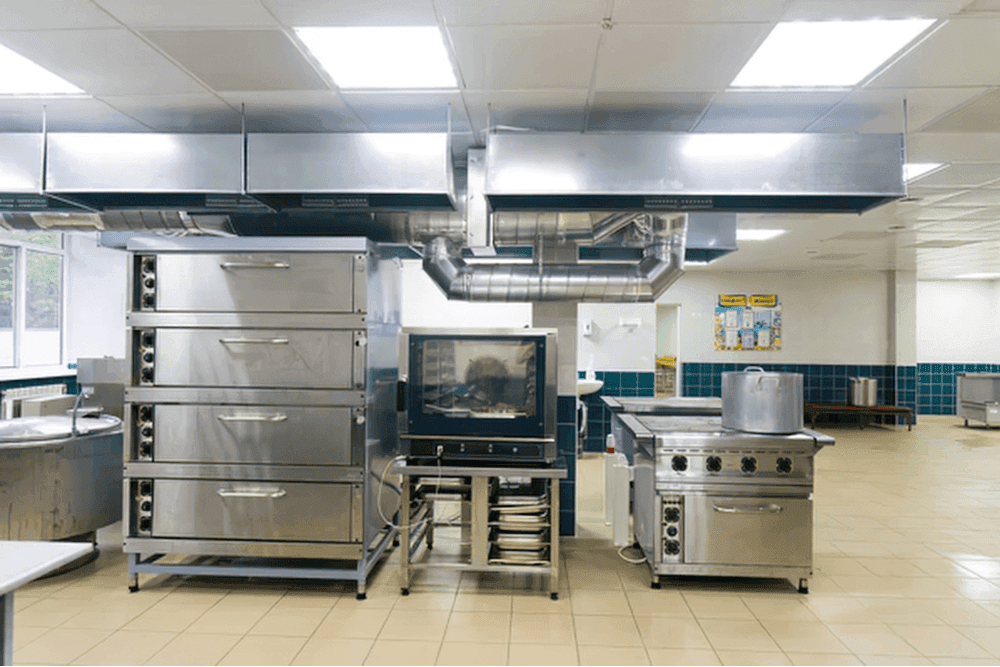
Commercial Kitchen Hood Cleaning in Abu Dhabi
Grease buildup inside a kitchen exhaust hood is one of the leading causes of commercial kitchen fires. One Click Technicians provides full hood, filter, duct, and fan cleaning for restaurants, hotels, and cafes across Abu Dhabi, with dated service documentation for your compliance records — and a cleaning schedule based on your actual cooking volume, not a generic calendar reminder.
What's Included in a Professional Clean
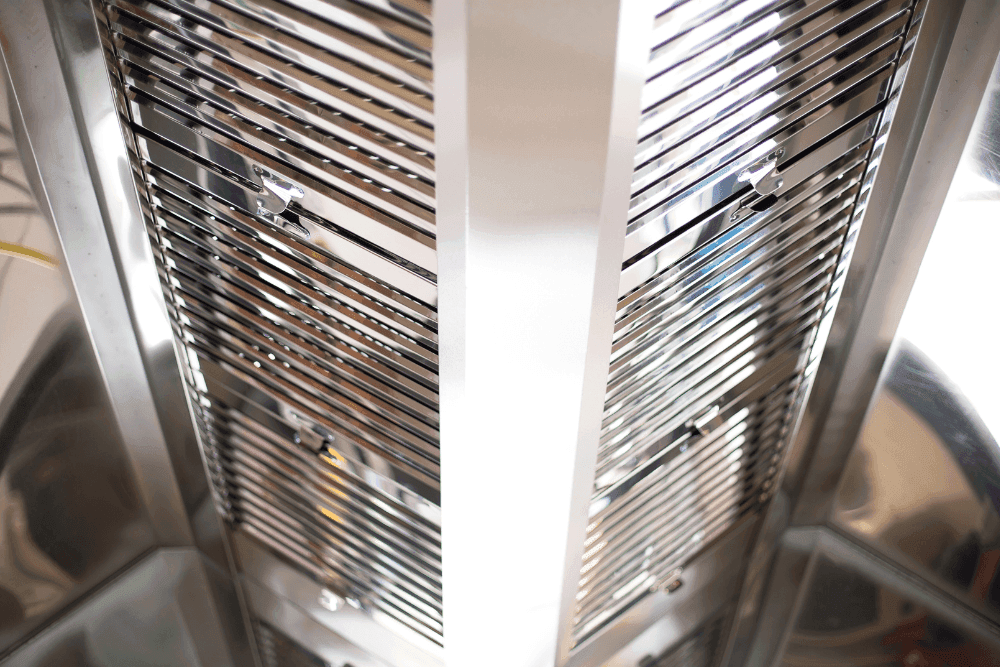
A proper hood cleaning covers the entire grease pathway, not just the visible canopy — grease travels through the whole system, and a clean that only wipes down what's visible leaves the actual fire risk in the ductwork and fan housing untouched. A restaurant's exhaust system pulls hot, grease-laden air continuously during every service, and that grease condenses and builds up along the entire path from the cooking surface to the roof exhaust point, not just where you can see it from the kitchen floor.
Looking for extraction system cleaning? Keep scrolling — the rest of this page covers that. This section is specifically for a cooker hood, range hood, or kitchen exhaust fan that's mechanically broken: not turning on, making noise, or not working at all.
Cooker Hood & Kitchen Exhaust Fan Repair
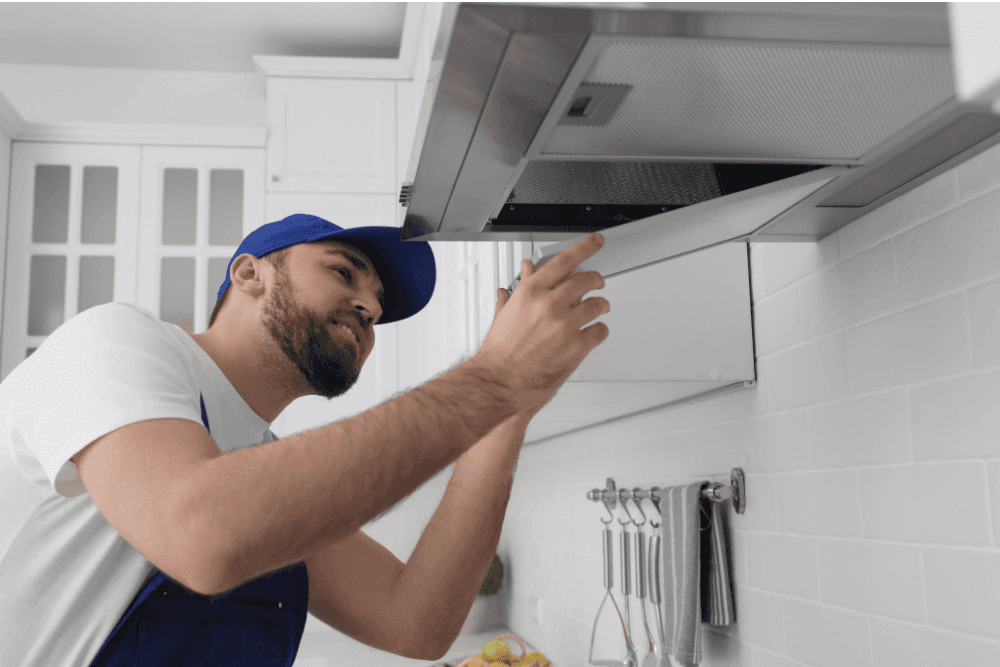
A hood that's dead, noisy, or has a switch that doesn't respond needs a repair visit, not a cleaning appointment — we handle both residential cooker hoods and commercial range hood motors, fans, and controls.
| Symptom | Likely cause | Typical price |
|---|---|---|
| Hood won't turn on at all | Usually a tripped breaker, a failed power switch, or a blown internal fuse — check the breaker first, since that alone resolves a genuine share of these calls. | AED 150 – 350 |
| Fan runs but airflow is weak | Almost always grease buildup restricting the fan blades or the internal duct path — this is a cleaning issue rather than a mechanical fault; see our extraction cleaning service below. | See cleaning pricing |
| Motor making grinding or rattling noise | Worn motor bearings or a fan blade that's come loose — common after years of continuous restaurant-hours operation, less common but not rare on home cooker hoods. | AED 200 – 500 |
| Light not working | A blown bulb in most cases; if a new bulb doesn't fix it, the light socket wiring or the switch itself has failed. | AED 100 – 250 |
| Speed control switch unresponsive | The switch mechanism or the control board behind it has worn out or failed — a straightforward part swap once confirmed. | AED 150 – 400 |
Hood won't turn on at all
AED 150 – 350
Usually a tripped breaker, a failed power switch, or a blown internal fuse — check the breaker first, since that alone resolves a genuine share of these calls.
Fan runs but airflow is weak
See cleaning pricing
Almost always grease buildup restricting the fan blades or the internal duct path — this is a cleaning issue rather than a mechanical fault; see our extraction cleaning service below.
Motor making grinding or rattling noise
AED 200 – 500
Worn motor bearings or a fan blade that's come loose — common after years of continuous restaurant-hours operation, less common but not rare on home cooker hoods.
Light not working
AED 100 – 250
A blown bulb in most cases; if a new bulb doesn't fix it, the light socket wiring or the switch itself has failed.
Speed control switch unresponsive
AED 150 – 400
The switch mechanism or the control board behind it has worn out or failed — a straightforward part swap once confirmed.
How Often Does Your Hood Actually Need Cleaning?
The answer depends on what and how much you cook, not a flat calendar reminder. The widely referenced NFPA 96 standard — used as the basis for cleaning schedules by kitchen ventilation specialists internationally, including here in the UAE — sets frequency by cooking volume and fuel type, because grease accumulates at very different rates across kitchen types.
| Interval | Cooking type | Examples |
|---|---|---|
| Monthly | Solid fuel & 24-hour operations | Charcoal grills, wood-fired ovens, round-the-clock kitchens |
| Quarterly | High-volume cooking | Wok stations, charbroiling, high-turnover restaurants |
| Semi-annually | Moderate-volume cooking | Standard full-service restaurants, hotel kitchens |
| Annually | Low-volume cooking | Cafes, seasonal kitchens, low-turnover operations |
Solid fuel & 24-hour operations
Monthly
Charcoal grills, wood-fired ovens, round-the-clock kitchens
High-volume cooking
Quarterly
Wok stations, charbroiling, high-turnover restaurants
Moderate-volume cooking
Semi-annually
Standard full-service restaurants, hotel kitchens
Low-volume cooking
Annually
Cafes, seasonal kitchens, low-turnover operations
Not sure which category your kitchen falls into? An initial inspection will tell us the actual grease accumulation rate for your specific setup, and we'll recommend a realistic schedule from there rather than defaulting to the most conservative option.
Signs You Need Cleaning Now, Not Just "Eventually"
You don't have to wait for a scheduled interval if any of these are already showing up.
This Isn't a Theoretical Risk
Abu Dhabi Civil Defence has directly linked grease buildup in kitchen ventilation systems to real fire incidents — including a restaurant fire inside an Abu Dhabi shopping mall that civil defence investigators traced back to accumulated cooking grease in the exhaust system. The mall was evacuated as a precaution, and while the fire was contained before it spread to neighbouring units, the cause was entirely preventable maintenance.
Abu Dhabi Police's own public safety guidance specifically calls out kitchen ventilators as a leading fire risk when they're allowed to become saturated with oil — the exact buildup a professional clean removes.
Grease fires in exhaust systems don't stay contained to the kitchen. They travel through ductwork, which is exactly why the duct interior — not just the visible hood — has to be part of every proper cleaning service. A fire that starts in a grease-lined duct can spread through the building's structure far faster than a fire confined to the cooking line itself, which is the underlying reason fire codes internationally treat exhaust system maintenance as a structural fire prevention measure, not just a kitchen hygiene task.
The Insurance Angle Nobody Mentions
Commercial property and liability insurance for restaurants and hotel kitchens commonly requires proof of regular, professional exhaust system cleaning as a condition of fire coverage. If a kitchen fire is traced back to grease accumulation in an exhaust system that wasn't being cleaned on a documented schedule, insurers can dispute or reduce a claim on the basis that reasonable fire prevention wasn't being maintained.
This is exactly why the dated service certificate and before-and-after documentation matter beyond just passing a health inspection — it's the paper trail that protects you if you ever need to make a claim. It's worth checking your own policy's specific requirements, but the safest position is having documented, regular cleaning regardless of what your policy technically demands.
Daily Staff Cleaning Isn't a Substitute
Most kitchens already have staff wipe down the visible exterior of the hood and filters as part of daily closing duties — and that's genuinely worth doing. But it's not the same thing as a professional clean, and shouldn't be treated as one when it comes to fire risk or compliance.
Staff cleaning reaches what's visible and reachable from the kitchen floor. It doesn't reach inside the ductwork, the fan housing, or the sections of the system between access panels — which is exactly where grease accumulates unseen and where most exhaust system fires actually start. The two aren't competing options; daily staff cleaning keeps the visible surfaces manageable between professional cleans, it doesn't replace them.
Questions Worth Asking Any Hood Cleaning Provider
Not every "hood cleaning" service covers the same scope. A handful of questions separate a genuine clean from a quick surface wipe-down at a lower price.
"Do you clean the duct interior, or just the visible hood and filters?"
A quote that only covers the canopy leaves the highest-risk part of the system untouched.
"Will I get dated documentation after the service?"
Without it, you have no proof of compliance for inspections or insurance purposes.
"What degreasing products do you use, and are they food-safe?"
Industrial degreasers used near food prep surfaces need to be safe for that environment, not just effective.
"Can you work around our operating hours?"
A provider who can't schedule outside your service hours forces you to close for cleaning, which most kitchens can't easily absorb.
Commercial Hood Cleaning Cost in Abu Dhabi
Price scales with kitchen size, number of hoods, and duct length — not a flat rate. Rough starting points:
Small cafe / single hood
AED 400 – 800
Canopy, filters, and accessible duct sections
Small-to-medium restaurant
AED 800 – 2,000
Full hood, duct, and fan system
Large restaurant / hotel kitchen
AED 2,000 – 5,000+
Multiple hoods, extended duct runs
Maintenance contracts available
For businesses on a recurring schedule — monthly, quarterly, or semi-annual — contract pricing works out lower per visit than booking one-off cleans each time.
* Prices are in AED and are typical starting ranges, inclusive of VAT where applicable. Your exact quote depends on an on-site or photo-based assessment of your kitchen's specific setup.
What Actually Happens During a Clean
Not every hood cleaning service covers the same ground — here's what a proper job actually involves, step by step.
- 1
Initial inspection
We assess the current grease accumulation level, identify access panel locations, and check that fire suppression system components aren't obstructed before starting.
- 2
Power and gas isolation
The hood and connected cooking equipment are powered down and gas isolated where relevant, for safety during the clean.
- 3
Filter removal and degreasing
Grease filters are removed and soaked in a commercial-grade degreasing solution while the rest of the system is cleaned.
- 4
Canopy and duct interior cleaning
Interior surfaces are manually scraped and degreased. Duct sections are accessed through panels and cleaned along their full length, not just what's visible from the kitchen.
- 5
Fan and motor cleaning
The exhaust fan blades and motor housing are degreased — this is the part that gets skipped most often by less thorough services, and it directly affects both fire risk and how hard the motor has to work. A fan coated in grease has to spin harder to move the same volume of air, which shortens motor life and raises energy use, on top of the fire risk from grease sitting directly on a component that generates heat and friction.
- 6
Rinse, reassembly, and inspection
Surfaces are rinsed, access panels resealed, filters reinstalled, and the finished job is inspected for anything missed.
- 7
Documentation
You receive before-and-after photos and a dated service certificate for your compliance records.
On the Job
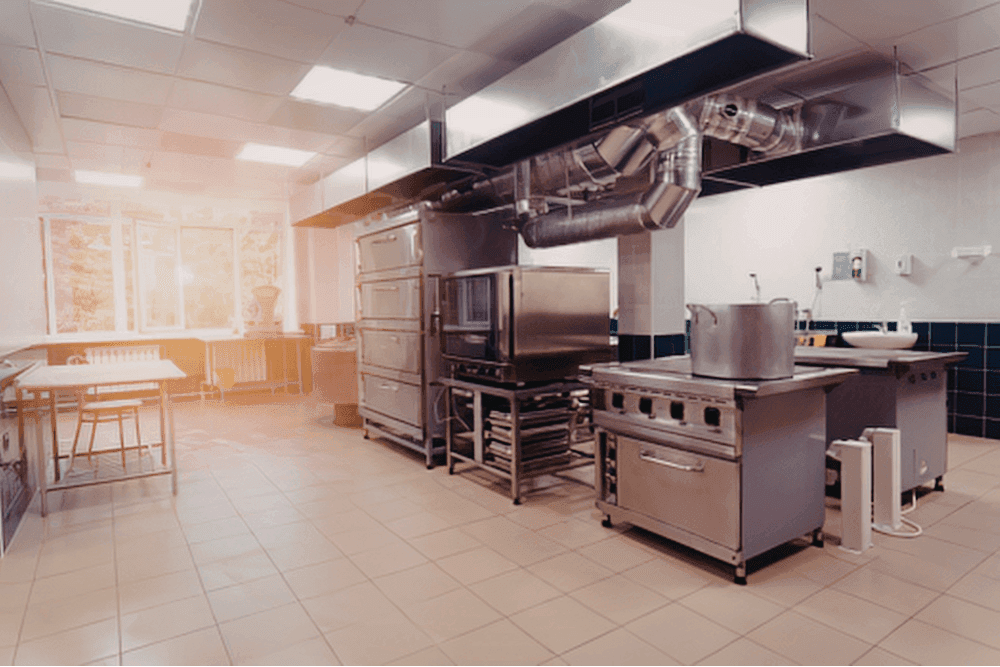
The Full Grease Pathway, Not Just the Visible Hood
Duct interior, fan housing, and canopy are all cleaned as one system — grease travels through the whole path, not just where you can see it.
What You Get for Your Compliance Records
Health and safety inspections ask for proof, not just a clean-looking hood. Every service includes documentation you can produce on request, whether that's for a scheduled municipal inspection, a food safety audit, or your own internal maintenance records.
Dated service certificate
A record of the service date, scope of work completed, and recommended next cleaning date based on your kitchen's category.
Before & after photos
Visual documentation of the grease level before cleaning and the finished result, useful for both your own records and inspection purposes.
Deficiency notes
If we find anything beyond normal grease buildup — a damaged fire suppression nozzle, a cracked duct section — it's noted and flagged so you can address it separately.
Where the Grease Actually Goes
A hood cleaning removes a genuinely significant volume of waste grease from a busy kitchen's exhaust system, and that grease can't just go down a drain or into general waste — it's an environmental hazard if disposed of improperly, and municipal waste regulations in the UAE govern how commercial cooking grease and degreasing byproducts need to be handled.
Waste grease and used degreasing solution are collected and disposed of through proper channels as part of the service — not left for kitchen staff to figure out afterward. Worth confirming with any provider you're considering, since improper disposal is a liability that ultimately traces back to the business, not just the cleaning contractor.
Areas We Cover
We service restaurants, hotels, and cafes across Abu Dhabi, including a high volume of clients in Mussafah's industrial and commercial districts.
Ready to Schedule?
Get a quote based on your kitchen size and cooking type — one-off cleans and recurring contracts both available.
Frequently Asked Questions
How much does commercial hood cleaning cost in Abu Dhabi?
How often should my kitchen hood be cleaned?
Do you repair a cooker hood or kitchen exhaust fan that's stopped working, not just clean it?
What are the signs my hood needs cleaning now?
Do you clean the ductwork, or just the visible hood?
Is kitchen hood grease buildup actually a serious fire risk?
Do you provide documentation for health and safety inspections?
Do you check the fire suppression system during the clean?
Can you clean outside of our operating hours?
Do you offer maintenance contracts, or only one-off cleans?
Do you service hotel kitchens and multi-hood facilities?
What areas of Abu Dhabi do you cover?
Is there a guarantee on the work?
Do you repair a restaurant's exhaust fan, not just clean the hood?
What's the difference between commercial and residential kitchen exhaust cleaning?
Ready When You Are
Book a licensed hood cleaning today.
Fixed price confirmed before any work starts. Licensed technicians, 90-day workmanship warranty.