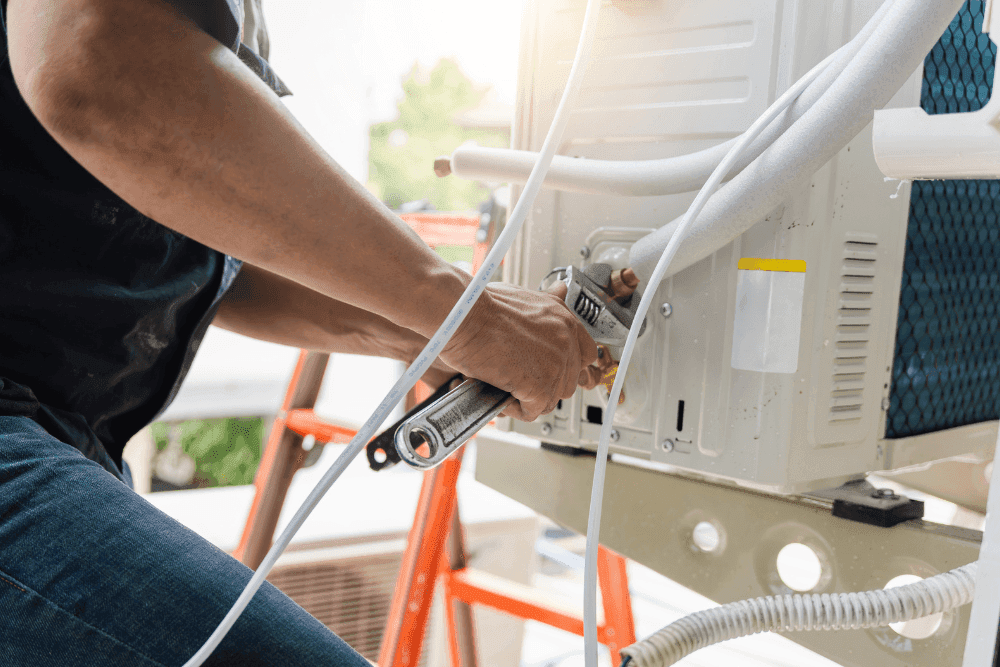
Dubai-Based Technicians · Same-Day
AC Repair in Dubai
Split, window, and central AC units — not cooling, gas leaks, frozen coils, and compressor faults fixed by certified technicians based locally in Dubai, not dispatched from Abu Dhabi, with a fixed price confirmed before any work starts.
Every Type of AC System
Split AC
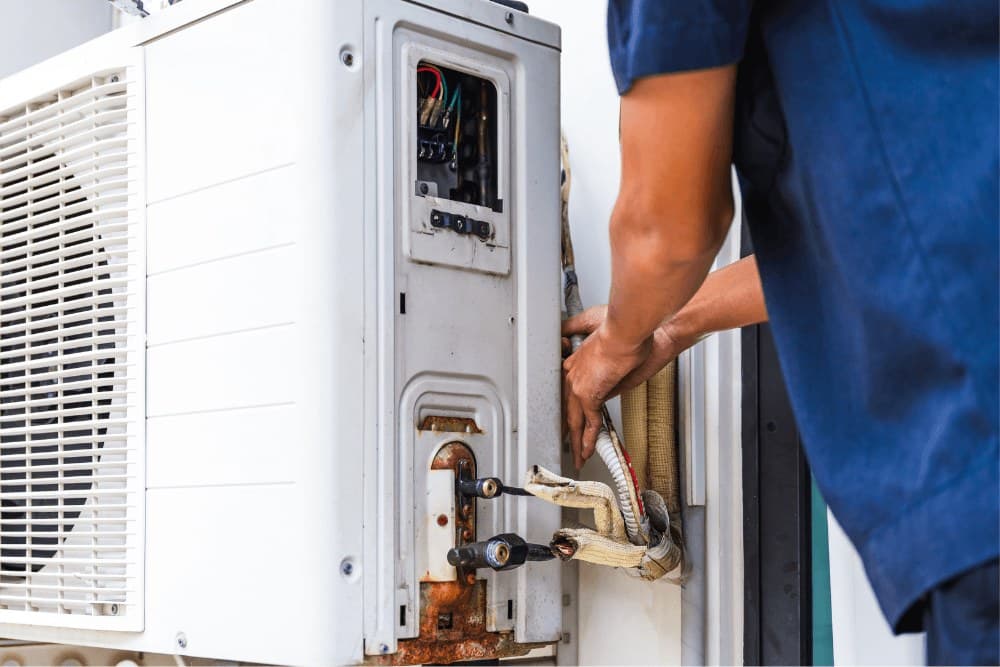
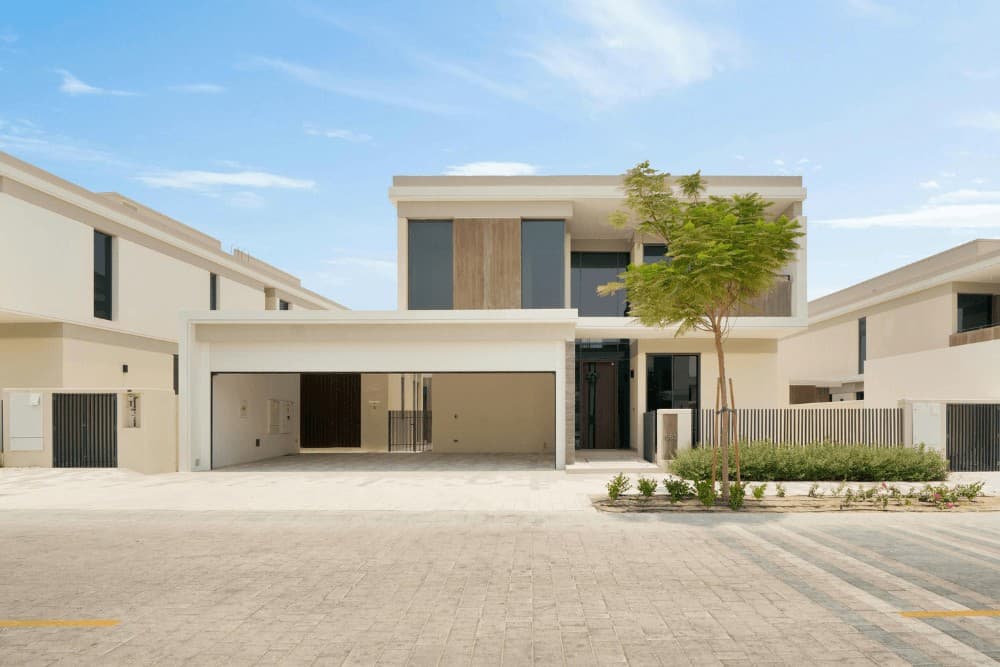
The standard setup in Dubai's villa communities (JVC, Al Barsha, International City) — an indoor wall unit and its own outdoor condenser per room. Most of our call-outs here are split units, and most first-visit fixes (gas top-up, capacitor, PCB fault) are completed on one visit.
Fan Coil Unit (district cooling)
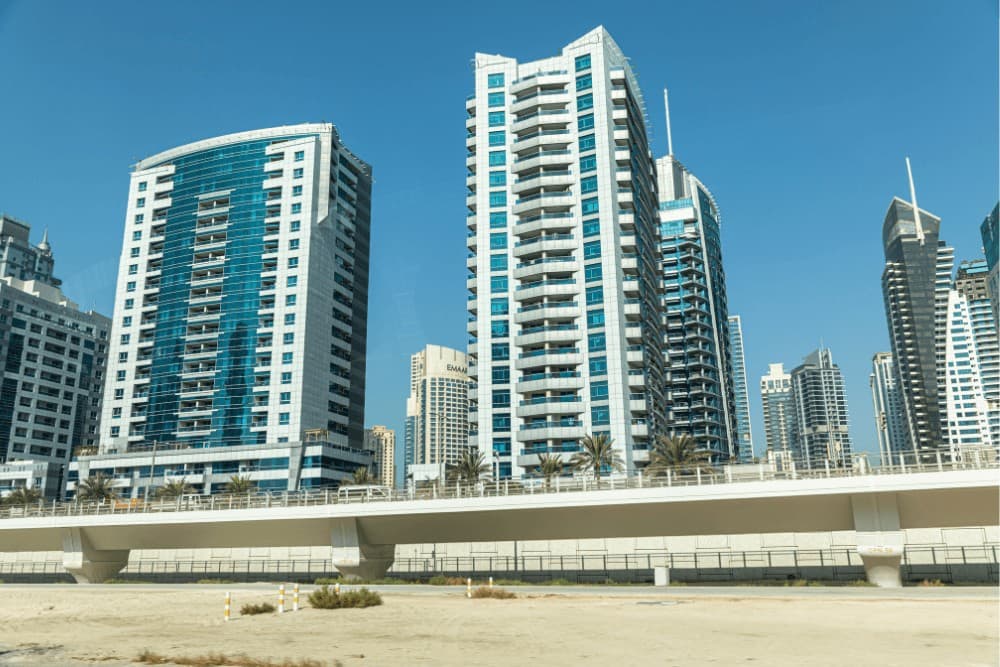
In many Downtown, Dubai Marina, and Business Bay towers, the building runs on district cooling — chilled water is piped in centrally, and what's in your apartment is a fan coil unit (FCU), not a standalone compressor. A no-cool or noisy-unit call in these buildings is almost always the FCU (fan, coil, thermostat valve) rather than a compressor fault, since the compressor isn't yours to begin with. Tell us if your building is on district cooling when you book — it changes what we expect to find.
Central / Ducted AC (self-contained)
Common in larger independent villas that aren't on a district cooling network, run from a single indoor air handler through ductwork with its own outdoor condenser. Diagnosis starts at the air handler and thermostat before tracing into the duct system.
How a Split AC Actually Works
A split AC has two halves working as one refrigerant circuit: the indoor unit (evaporator coil, blower fan, filter) pulls heat and moisture out of room air, and the outdoor unit (compressor, condenser coil, fan) dumps that heat outside. Refrigerant gas carries the heat between the two, changing from liquid to gas and back as it's compressed and expanded around the loop. Nearly every AC fault traces back to a problem in one of three places: the refrigerant circuit itself, the compressor that drives it, or the electronics controlling when everything runs.
The compressor is the single most expensive component and the one most repairs are ultimately trying to protect. It only runs when the thermostat calls for cooling, and a healthy system cycles it on and off in reasonably long intervals — short cycling (on for a few minutes, off, repeat) is itself a symptom worth investigating rather than living with, because it wears the compressor faster than continuous operation would.
A capacitor sits in the outdoor unit and provides the electrical surge the compressor and fan motors need to start. It's a small, inexpensive part, but a failing capacitor is one of the single most common reasons a unit's fan runs while the compressor stays silent — the fan doesn't need the same starting surge, so it keeps working even after the capacitor can no longer kick the compressor into motion.
The condensate drain line carries water the evaporator coil pulls out of humid air away from the indoor unit. It's a passive gravity-fed line with no moving parts, which is exactly why it's so commonly overlooked — algae and dust build up inside it gradually until it blocks, at which point water backs up and drips or overflows indoors instead of draining outside.
The thermostat, whether a simple dial or a smart controller, does one job: tell the compressor when to start and stop based on the temperature it reads. A thermostat reading incorrectly — often from being mounted somewhere exposed to direct sun, a draft, or heat from the unit itself — makes the whole system behave oddly even when every mechanical component is working perfectly, which is why we check thermostat placement and calibration before assuming a deeper fault.
Unit sizing matters more than people expect. An undersized AC for the room it's cooling runs constantly and never quite catches up, which looks identical to a refrigerant or airflow fault from the outside. An oversized unit, on the other hand, cools the air quickly without running long enough to properly dehumidify it, leaving the room feeling cold but still clammy — worth ruling out as a sizing mismatch before assuming something is broken.
Which Refrigerant Does Your AC Use?
Matters for gas refills specifically — the wrong refrigerant can't simply be topped up with a different one.
R22
The older refrigerant, still running in some older buildings' AC units but being phased out globally. If your system uses R22 and needs a significant refrigerant top-up, it's worth discussing whether repair or replacement makes more sense — R22 costs more and is getting harder to source as the phase-out continues.
R410A
The refrigerant most mid-generation split units run on — the mainstream standard for roughly the past 15 years. Widely available, no compatibility issues with a same-refrigerant top-up.
R32
Newer, more efficient, and increasingly standard on recent unit generations. Mildly flammable compared to R410A, which means it needs specific handling procedures and tools — a genuine reason to use a certified technician rather than an uncertified one for R32 systems specifically.
Common Error Codes (Daikin Reference — Similar Across Most Brands)
Exact codes vary by manufacturer, but the fault categories below are consistent across most split AC brands sold in the UAE.
| Code | Fault | Likely cause | DIY-checkable? | Typical fix |
|---|---|---|---|---|
| A1 | Indoor unit PCB fault | Something on the indoor control board has triggered an internal fault flag. | Partially — try a breaker reset first | Cut power at the breaker for 30 seconds and restart — that clears a real share of these; if A1 keeps coming back, the board itself needs testing. |
| A3 | Drain level fault | The float switch sitting in the drain pan has sensed water rising to an unsafe level, which almost always traces back to a blocked drain line rather than the switch itself. | Yes — check the drain line first | Clearing the condensate line settles the majority of A3 codes without needing anything replaced. |
| A5 | Freeze protection (indoor coil too cold) | The indoor coil has dropped cold enough to risk icing over — usually a filter dirty enough to choke airflow, occasionally low refrigerant. | Partially — check and clean the filter | Clean the filter and reassess airflow first; if A5 persists with a genuinely clean filter, refrigerant charge is the next thing checked. |
| A6 | Indoor fan motor fault | The blower motor inside is pulling more current than it should, or has stalled outright — either an obstruction or a real motor fault. | No — needs proper inspection | The motor gets tested, and replaced if it's confirmed faulty. |
| E1 | Outdoor unit PCB fault | The outdoor control board has flagged an internal fault condition of its own. | Partially — try a breaker reset first | Same approach as A1 — reset first, board testing if it recurs. |
| E3 | High pressure protection | The system has shut itself down as a safety measure against dangerously high refrigerant pressure, usually because the outdoor unit isn't getting enough airflow or the condenser coil is blocked. | Yes — check the outdoor unit for obstructions | Clear anything blocking airflow and confirm proper clearance around the unit; call a technician if E3 keeps returning after that. |
| E4 | Low pressure protection | Refrigerant pressure has fallen below what's safe to operate on — in practice, this is usually a leak announcing itself. | No — needs proper leak detection | Find and repair the leak before any top-up happens — refilling without fixing the leak just delays the same call. |
| E5 | Outdoor unit overcurrent | Either the compressor or the outdoor fan is drawing more current than it should — could be a rough start, a tired capacitor, or a genuine compressor problem underneath it all. | No — needs electrical diagnosis | Capacitor gets tested first since it's both the more common and the cheaper explanation; compressor testing only follows if the capacitor checks out fine. |
| E7 | Outdoor fan motor fault | The outdoor condenser fan isn't spinning the way it should — obstruction, a failing capacitor, or the motor itself giving out. | Yes — check for debris first | Clear any visible debris first; if the fan still won't run properly, it's a motor or capacitor replacement. |
| L4 | Outdoor heat sink overheat | The electronics in the outdoor unit are running hotter than they should, almost always because something's restricting airflow around the unit. | Yes — check clearance and ventilation | Make sure the outdoor unit has proper breathing room; a fault that persists after that needs a technician's eyes on it. |
| L5 | Inverter compressor overcurrent (Daikin) | A momentary overcurrent flagged in the inverter compressor's power transistor — this one's specific to Daikin's inverter range, distinct from the generic E5 code other brands use for a similar issue. | Partially — try a breaker reset first | Power cycle it and watch whether L5 comes back; if it does, the compressor windings and inverter board both need testing, not just another reset. |
| U0 | Insufficient refrigerant | The system's own sensors have detected the charge sitting below expected levels — this reflects a leak, not the normal, gradual loss some people assume is just how AC units age. | No — needs proper leak detection | Track down and seal the leak, then recharge to the correct level for that specific unit — not just a top-up to whatever feels right. |
| U4 / UF | Communication error (indoor–outdoor) | The indoor and outdoor units have simply stopped talking to each other — a wiring or connector issue somewhere between the two. | Partially — try a breaker reset first | If the wiring's accessible, we check those connections directly; otherwise it's a matter of tracing the signal fault through the system. |
A1 — Indoor unit PCB fault
- Likely cause
- Something on the indoor control board has triggered an internal fault flag.
- DIY-checkable?
- Partially — try a breaker reset first
- Typical fix
- Cut power at the breaker for 30 seconds and restart — that clears a real share of these; if A1 keeps coming back, the board itself needs testing.
A3 — Drain level fault
- Likely cause
- The float switch sitting in the drain pan has sensed water rising to an unsafe level, which almost always traces back to a blocked drain line rather than the switch itself.
- DIY-checkable?
- Yes — check the drain line first
- Typical fix
- Clearing the condensate line settles the majority of A3 codes without needing anything replaced.
A5 — Freeze protection (indoor coil too cold)
- Likely cause
- The indoor coil has dropped cold enough to risk icing over — usually a filter dirty enough to choke airflow, occasionally low refrigerant.
- DIY-checkable?
- Partially — check and clean the filter
- Typical fix
- Clean the filter and reassess airflow first; if A5 persists with a genuinely clean filter, refrigerant charge is the next thing checked.
A6 — Indoor fan motor fault
- Likely cause
- The blower motor inside is pulling more current than it should, or has stalled outright — either an obstruction or a real motor fault.
- DIY-checkable?
- No — needs proper inspection
- Typical fix
- The motor gets tested, and replaced if it's confirmed faulty.
E1 — Outdoor unit PCB fault
- Likely cause
- The outdoor control board has flagged an internal fault condition of its own.
- DIY-checkable?
- Partially — try a breaker reset first
- Typical fix
- Same approach as A1 — reset first, board testing if it recurs.
E3 — High pressure protection
- Likely cause
- The system has shut itself down as a safety measure against dangerously high refrigerant pressure, usually because the outdoor unit isn't getting enough airflow or the condenser coil is blocked.
- DIY-checkable?
- Yes — check the outdoor unit for obstructions
- Typical fix
- Clear anything blocking airflow and confirm proper clearance around the unit; call a technician if E3 keeps returning after that.
E4 — Low pressure protection
- Likely cause
- Refrigerant pressure has fallen below what's safe to operate on — in practice, this is usually a leak announcing itself.
- DIY-checkable?
- No — needs proper leak detection
- Typical fix
- Find and repair the leak before any top-up happens — refilling without fixing the leak just delays the same call.
E5 — Outdoor unit overcurrent
- Likely cause
- Either the compressor or the outdoor fan is drawing more current than it should — could be a rough start, a tired capacitor, or a genuine compressor problem underneath it all.
- DIY-checkable?
- No — needs electrical diagnosis
- Typical fix
- Capacitor gets tested first since it's both the more common and the cheaper explanation; compressor testing only follows if the capacitor checks out fine.
E7 — Outdoor fan motor fault
- Likely cause
- The outdoor condenser fan isn't spinning the way it should — obstruction, a failing capacitor, or the motor itself giving out.
- DIY-checkable?
- Yes — check for debris first
- Typical fix
- Clear any visible debris first; if the fan still won't run properly, it's a motor or capacitor replacement.
L4 — Outdoor heat sink overheat
- Likely cause
- The electronics in the outdoor unit are running hotter than they should, almost always because something's restricting airflow around the unit.
- DIY-checkable?
- Yes — check clearance and ventilation
- Typical fix
- Make sure the outdoor unit has proper breathing room; a fault that persists after that needs a technician's eyes on it.
L5 — Inverter compressor overcurrent (Daikin)
- Likely cause
- A momentary overcurrent flagged in the inverter compressor's power transistor — this one's specific to Daikin's inverter range, distinct from the generic E5 code other brands use for a similar issue.
- DIY-checkable?
- Partially — try a breaker reset first
- Typical fix
- Power cycle it and watch whether L5 comes back; if it does, the compressor windings and inverter board both need testing, not just another reset.
U0 — Insufficient refrigerant
- Likely cause
- The system's own sensors have detected the charge sitting below expected levels — this reflects a leak, not the normal, gradual loss some people assume is just how AC units age.
- DIY-checkable?
- No — needs proper leak detection
- Typical fix
- Track down and seal the leak, then recharge to the correct level for that specific unit — not just a top-up to whatever feels right.
U4 / UF — Communication error (indoor–outdoor)
- Likely cause
- The indoor and outdoor units have simply stopped talking to each other — a wiring or connector issue somewhere between the two.
- DIY-checkable?
- Partially — try a breaker reset first
- Typical fix
- If the wiring's accessible, we check those connections directly; otherwise it's a matter of tracing the signal fault through the system.
No Display? Diagnose by Symptom
Many split units, especially older or budget models, have no digital fault display — these are the patterns we see most.
| Symptom | Likely cause | What to do |
|---|---|---|
| Fan runs, compressor stays silent | Nine times out of ten, this is a start capacitor that's given up, not the compressor itself. | A capacitor swap is cheap and quick once confirmed — get that tested before anyone quotes you compressor work. |
| AC runs constantly, never reaches set temperature | Either the refrigerant's leaking out somewhere, or the condenser coil is too dust-caked to actually shed heat. | Think back to when the coil was last cleaned — if it's been a while, that's the more likely culprit than gas. |
| Hissing or bubbling sound from indoor or outdoor unit | That's refrigerant actively escaping from a joint or pipe — not a sound the system should ever make. | Book this one soon rather than waiting it out; a leak only ever gets worse from here. |
| Outdoor unit warm, indoor unit not cooling | The compressor's clearly running and generating heat, but somewhere the refrigerant isn't completing its full cycle. | This needs gauges to diagnose properly — a technician checking actual pressure readings, not a guess. |
| Compressor cycles on for a few minutes, off for much longer, repeatedly | Could be a pressure switch reacting to an abnormal condition, or hard-starting caused by a failing capacitor. | Even if it's still cooling adequately for now, this pattern wears the compressor down faster — worth addressing before it's not cooling at all. |
| Water dripping from the indoor unit | Almost always a blocked condensate line. | One of the cheapest, fastest fixes in AC repair — clearing the line usually settles it the same visit. |
| Outdoor fan not running or not spinning | Could be the fan motor itself failing, a seized bearing, or that same capacitor fault that also silences the compressor. | Look for anything physically jamming it first; beyond that, it's a motor or capacitor call for a technician. |
| Outdoor unit won't start at all | A tripped breaker, a dead capacitor, or a genuine fault at the outdoor disconnect box. | Check the breaker once — if it trips again, stop resetting it and get an electrical diagnosis instead. |
| AC on but not blowing air | The indoor blower motor's failed, or on a ducted system, the fault sits at the air handler itself. | This points squarely at the indoor fan side, not the compressor or refrigerant circuit at all. |
| 'Sensor problem' or erratic temperature reading on inverter models | A thermistor giving bad readings, or a loose sensor connector — inverter units lean on this reading far more heavily than fixed-speed models do. | This genuinely needs proper sensor testing; guessing at an inverter fault tends to waste a visit. |
| Inverter AC running oddly — speed changes unexpectedly, or won't modulate | Inverter compressors continuously adjust speed based on sensor feedback, so a fault in that feedback loop reads as erratic behavior rather than a clean on/off failure. | Mention it's an inverter model when you call — the diagnostic approach genuinely differs from a fixed-speed unit. |
Fan runs, compressor stays silent
- Likely cause
- Nine times out of ten, this is a start capacitor that's given up, not the compressor itself.
- What to do
- A capacitor swap is cheap and quick once confirmed — get that tested before anyone quotes you compressor work.
AC runs constantly, never reaches set temperature
- Likely cause
- Either the refrigerant's leaking out somewhere, or the condenser coil is too dust-caked to actually shed heat.
- What to do
- Think back to when the coil was last cleaned — if it's been a while, that's the more likely culprit than gas.
Hissing or bubbling sound from indoor or outdoor unit
- Likely cause
- That's refrigerant actively escaping from a joint or pipe — not a sound the system should ever make.
- What to do
- Book this one soon rather than waiting it out; a leak only ever gets worse from here.
Outdoor unit warm, indoor unit not cooling
- Likely cause
- The compressor's clearly running and generating heat, but somewhere the refrigerant isn't completing its full cycle.
- What to do
- This needs gauges to diagnose properly — a technician checking actual pressure readings, not a guess.
Compressor cycles on for a few minutes, off for much longer, repeatedly
- Likely cause
- Could be a pressure switch reacting to an abnormal condition, or hard-starting caused by a failing capacitor.
- What to do
- Even if it's still cooling adequately for now, this pattern wears the compressor down faster — worth addressing before it's not cooling at all.
Water dripping from the indoor unit
- Likely cause
- Almost always a blocked condensate line.
- What to do
- One of the cheapest, fastest fixes in AC repair — clearing the line usually settles it the same visit.
Outdoor fan not running or not spinning
- Likely cause
- Could be the fan motor itself failing, a seized bearing, or that same capacitor fault that also silences the compressor.
- What to do
- Look for anything physically jamming it first; beyond that, it's a motor or capacitor call for a technician.
Outdoor unit won't start at all
- Likely cause
- A tripped breaker, a dead capacitor, or a genuine fault at the outdoor disconnect box.
- What to do
- Check the breaker once — if it trips again, stop resetting it and get an electrical diagnosis instead.
AC on but not blowing air
- Likely cause
- The indoor blower motor's failed, or on a ducted system, the fault sits at the air handler itself.
- What to do
- This points squarely at the indoor fan side, not the compressor or refrigerant circuit at all.
'Sensor problem' or erratic temperature reading on inverter models
- Likely cause
- A thermistor giving bad readings, or a loose sensor connector — inverter units lean on this reading far more heavily than fixed-speed models do.
- What to do
- This genuinely needs proper sensor testing; guessing at an inverter fault tends to waste a visit.
Inverter AC running oddly — speed changes unexpectedly, or won't modulate
- Likely cause
- Inverter compressors continuously adjust speed based on sensor feedback, so a fault in that feedback loop reads as erratic behavior rather than a clean on/off failure.
- What to do
- Mention it's an inverter model when you call — the diagnostic approach genuinely differs from a fixed-speed unit.
What Actually Breaks, and Why
Capacitor failure as the default first check
Given how often a failing capacitor mimics a much scarier symptom (compressor not starting), it's one of the first things worth ruling out on almost any no-cool complaint before assuming the expensive fault.
Refrigerant leaks worsening gradually, not suddenly
A slow leak often lets a unit run at reduced performance for weeks or months before failing outright — which is exactly why 'my AC has gotten weaker over time' deserves a proper leak check rather than just a gas top-up.
FCU faults mistaken for compressor faults in towers
In district-cooled buildings — a large share of Dubai Marina, Downtown, and Business Bay towers — the compressor isn't in the apartment at all. What looks like 'the AC isn't cooling' is almost always the fan coil unit: a stuck control valve, a dirty coil, or a failed fan. Knowing your building is on district cooling before the visit changes the whole diagnostic starting point.
R32 systems needing certified handling specifically
Because R32 is mildly flammable, a technician working on these systems needs different tools and certified handling procedures than older R410A or R22 systems — worth confirming your technician is equipped for your specific refrigerant type.
Outdoor coil corrosion in coastal and Marina-adjacent buildings
Condenser coils on units within a few kilometres of the coast — Dubai Marina, JBR, Palm Jumeirah-facing towers — pick up salt-laden air that corrodes aluminium fins faster than inland installations. It shows up as gradually declining cooling performance long before it looks like visible damage, which is why we check fin condition specifically on coastal jobs rather than only checking for leaks.
How We Diagnose an AC Fault
Start with whatever the unit itself is telling you
A display code, where the unit has one, narrows things down immediately. Plenty of split units in Dubai — especially older or budget-tier ones — don't display anything, so we read the symptom pattern instead.
Clear the free and cheap explanations before touching refrigerant
Filter condition, outdoor unit clearance, drain line, and breaker status all get checked first — a real share of call-outs resolve right here, before any gas or part is even considered.
Measure refrigerant pressure rather than guess at it
If the symptoms point toward a leak or charge issue, we test actual pressure readings on-site — this is precisely where having certified equipment and proper training separates a real diagnosis from a guess.
One price, confirmed before we start
Once we know exactly what's wrong, that's the number you pay — it doesn't creep upward once the job's already underway.
Common AC Faults, and What Actually Causes Them
AC not cooling at all
Likely cause: Three real possibilities: the refrigerant has leaked out, the compressor itself has failed, or a stuck contactor is stopping the compressor from ever starting in the first place.
If it's a gas leak, don't let anyone just top up the refrigerant without finding where it's escaping first — that buys you a few weeks at best before you're paying for another refill.
AC running but blowing warm or lukewarm air
Likely cause: Could be refrigerant running low, a condenser coil caked in dust and unable to shed heat properly, or a compressor on its way out.
Get the coil cleaned before agreeing to anything more expensive — a genuine share of these calls turn out to be airflow, not gas or compressor.
Water leaking from the indoor unit
Likely cause: Nearly always a blocked condensate line — the drain pan cracking is a real but distant second cause.
This is usually done and fixed in the same visit; clearing the line is all it takes in most cases, no parts required.
AC trips the circuit breaker
Likely cause: A capacitor failing, a compressor winding shorting out, or a genuine wiring fault somewhere in the unit.
Resetting the breaker and hoping it holds isn't a strategy — repeated trips mean a real fault, and running it anyway risks making the eventual repair bigger.
Ice forming on the indoor coil or refrigerant lines
Likely cause: Low refrigerant, a filter dirty enough to choke airflow, or a fan motor too weak to move sufficient air across the coil.
Switch it off and let the ice melt fully before anyone inspects it — a technician working on an iced-up unit risks compounding compressor damage that's already underway.
Musty smell or visible mold when the AC runs
Likely cause: Mold or bacterial buildup on the evaporator coil or sitting in the drain pan — a genuinely common finding in Dubai's coastal humidity, where moisture lingers inside the unit between cycles.
A proper coil and drain pan clean clears this out. See AC Cleaning & Duct Cleaning.
AC short cycling (turns on and off repeatedly)
Likely cause: An oversized unit that satisfies the room too fast, a thermostat that's stopped reading accurately, or a refrigerant pressure issue tripping the safety switches.
This wears the compressor down faster than a unit that just runs continuously — worth having looked at rather than treating it as a quirk of the system.
Loud noise from the outdoor unit
Likely cause: A bearing going in the fan motor, a panel that's worked loose, or debris that's found its way into the fan itself — common on units mounted near construction sites or exposed rooftops.
Have a look for anything visibly caught in the fan first; a bearing or motor issue needs a technician regardless.
AC Brands We Service
We service every major AC brand sold in the UAE. Here's what actually differs between them when something goes wrong.
Daikin
The most-asked-about AC brand in Dubai, across split, ducted, and VRV multi-zone systems common in commercial towers. Daikin's inverter models carry their own error code set (L4, L5) distinct from the fixed-speed codes above.
Gree
Common across both villa split units and multi-unit buildings. We carry common Gree parts on the van rather than needing to order in for routine faults.
Carrier
A long-established brand in the UAE market. When Carrier units fail, it's most often the capacitor or PCB rather than the compressor.
Mitsubishi
Both standard split systems and Mitsubishi Electric's ducted range. Sensor and thermistor faults on inverter models are the fault type we see most.
O General
A steady presence in Dubai villas. Straightforward mechanical faults — capacitor, fan motor — are the typical repair.
Midea
A common budget-to-mid-range choice. PCB faults are worth testing before assuming a bigger issue.
Running a multi-zone Daikin VRV or VRF system in a commercial tower rather than a standard split unit? See our commercial AC & chiller repair page for that scale of equipment.
AC Uninstallation & Packing
Moving out, moving the unit to another room, or putting it into storage — uninstalling an AC properly is a distinct job from repair, with its own risks if done carelessly (refrigerant loss, coil damage in transit, and a unit that won't hold gas properly when it's reinstalled).
Uninstallation & packing
Safe refrigerant recovery, disconnection, and careful packing of the indoor and outdoor units — protects against damage in transit and avoids venting refrigerant into the atmosphere.
Moving with you
Relocating within Dubai? We can transport the packed unit and reinstall it at the new address, tested and recharged, rather than treating pickup and installation as separate bookings.
Storage-ready packing
If the unit is going into storage rather than straight back up, it's packed to protect the coils and electronics over an extended period.
Typical AC uninstallation & packing: AED 200 – 450 per unit. Reinstallation at a new address is quoted alongside it once we know the distance and access at both ends.
AC Repair Pricing
Every repair gets a fixed price confirmed on-site after diagnosis, before any work starts. Minor faults — capacitors, fan motors, control boards, gas top-ups with leak repair — sit at the lower end. Evaporator coil repairs and compressor replacement run higher given the part cost itself, and a compressor price specifically depends on your unit's capacity and refrigerant type.
Capacitor / fan motor
The most common minor faults
AED 150 – 350
PCB / control board
Brand and model dependent
AED 350 – 700
Gas top-up & leak repair
Depends on leak location and refrigerant type (R22, R410A, R32)
AED 250 – 600
Evaporator / condenser coil repair
Coil repair or cleaning, not full replacement
AED 400 – 900
Compressor replacement
Depends on unit capacity, tonnage and refrigerant type
AED 1,500 – 3,000+
AC uninstallation & packing
Per unit, excludes transport for relocation
AED 200 – 450
See our Repair or Replace guide for how we think about aging compressors versus a new unit.
These ranges are consistent across our Abu Dhabi and Dubai teams — the fault, not the emirate, drives the price. District-cooled FCU repairs in Dubai towers typically sit at the lower end of these ranges, since there's no compressor or refrigerant work involved.
Frequently Asked Questions
What's a realistic AC repair bill in Dubai?
Will you just top up the gas, or do you find the leak first?
My AC's getting old — repair it, or start looking at replacement?
What's actually different between AC repair and your Air Cooler service?
Can I put my AC on a maintenance contract instead of calling when it breaks?
What about villas with central or fully ducted systems?
We run a restaurant/office — do you handle commercial units and chillers too?
Can you actually make it same-day during peak summer?
Does it matter which refrigerant type my system uses?
Fan's spinning but the compressor won't make a sound — what's that about?
Does a hissing noise always mean a refrigerant leak?
Can a technician just use R32 in my older R410A unit if that's what they have on the van?
My AC keeps tripping the breaker every time I turn it on — is that serious?
There's ice built up on my unit — safe to keep running it?
What does an L5 error mean on my Daikin AC?
Do you uninstall and pack AC units for moving?
Is this the same team as your Abu Dhabi technicians?
My building has district cooling — do you still do AC repair here?
How do I know if my apartment is on district cooling or has its own AC unit?
Do you need building access approval for tower apartments in Downtown or the Marina?
Do you cover Dubai Marina, JVC, and JLT for AC repair?
Based in Abu Dhabi instead? See our Abu Dhabi AC Repair page →
Areas We Cover in Dubai
District cooling is the norm in most newer towers; villa and low-rise areas run mostly on standalone split systems. Worth knowing before your visit — see the note under each area.

Dubai Marina
Mostly district cooling — FCU faults, not compressor

JVC
Villa and low-rise split units, standalone condensers

JLT
Mixed towers, some district cooling, some split
Business Bay
Commercial and residential towers, district cooling common

Downtown Dubai
High-rise, district cooling standard in most buildings

Al Barsha
Villas and low-rise, mostly self-contained split systems

Al Quoz
Warehousing and residential mix, commercial units common
Bur Dubai
Older buildings, more window and legacy split units
Al Qusais
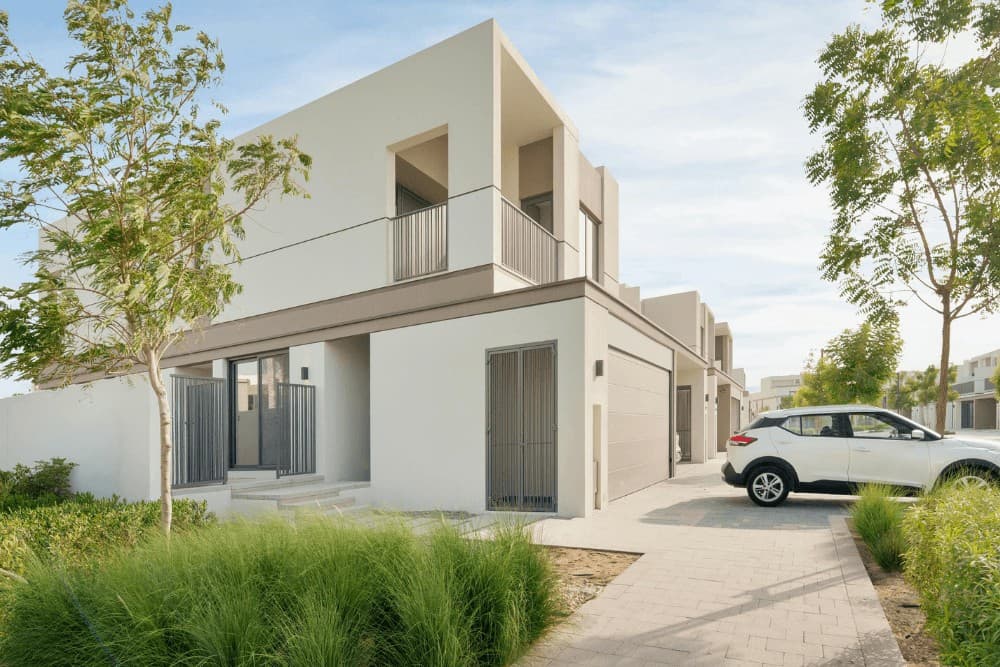
Villas and mid-rise, standalone split and central systems

Al Nahda
Dense apartment blocks, mostly split units

Dubai Silicon Oasis
Villas and low-rise, standalone condensers

International City
Compact apartments, window and split units
Don't see your area listed? Call to confirm — we likely cover it.
Ready When You Are
Book a certified AC technician today.
Fixed price confirmed before any work starts. Licensed technicians, 90-day workmanship warranty.