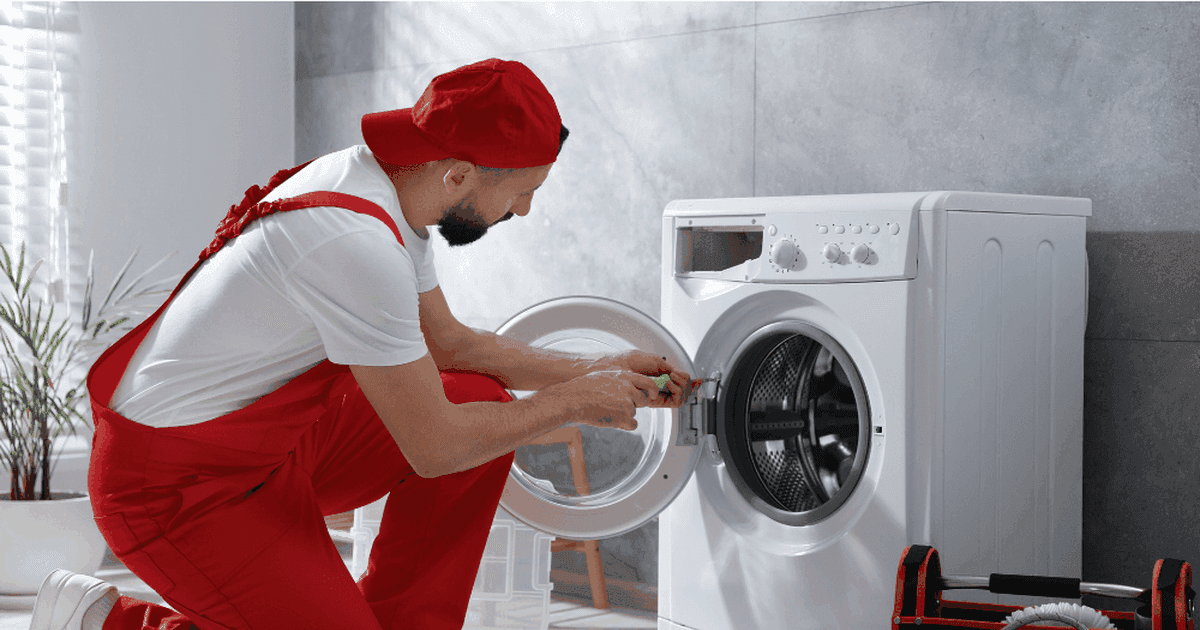
A blocked filter is behind more "my washing machine won't drain" calls than almost anything else — and in Abu Dhabi it happens faster than most places, because desalinated tap water leaves a fine mineral scale on top of the usual lint and debris. A filter that would need cleaning every couple of months elsewhere often needs it every 4–6 weeks here during peak use.
Before you start
- Unplug the machine and turn off the water supply valve first.
- Put a shallow tray or towel under the filter access panel — some standing water always comes out, even after a drain cycle.
- If you can, run a quick spin cycle first so the machine has drained as much water as possible before you open the panel.
General cleaning steps
- Open the small access flap at the bottom-front of the machine and locate the filter cap — it's usually round, with a small tab or handle.
- Turn the filter cap counter-clockwise to loosen it, and pull it out slowly — water will come out as you do.
- Check inside the filter housing and the filter itself for lint, coins, buttons, hairpins, and mineral scale buildup.
- Rinse the filter under running water and use an old toothbrush to work off scale and trapped debris.
- Wipe out the housing cavity before refitting — leftover debris there defeats the point of cleaning the filter itself.
- Screw the filter back in firmly, close the access panel, and run a short empty cycle to check for leaks before doing a full wash.
Where the filter actually is — by brand
| Brand | Typical filter location |
|---|---|
| Samsung, LG, Whirlpool | Small flap, bottom-right or bottom-left front corner |
| Bosch, Siemens | Bottom-front corner, sometimes behind a wider service panel than other brands |
| Ariston, Beko, Electrolux | Bottom-front corner, similar round cap design |
| Front-loaders generally | Bottom-front corner, behind a small hinged or pop-off flap |
| Top-loaders | Often no external filter cap — filter is a mesh trap inside the drum or agitator area instead |
Samsung, LG, Whirlpool
- Typical filter location
- Small flap, bottom-right or bottom-left front corner
Bosch, Siemens
- Typical filter location
- Bottom-front corner, sometimes behind a wider service panel than other brands
Ariston, Beko, Electrolux
- Typical filter location
- Bottom-front corner, similar round cap design
Front-loaders generally
- Typical filter location
- Bottom-front corner, behind a small hinged or pop-off flap
Top-loaders
- Typical filter location
- Often no external filter cap — filter is a mesh trap inside the drum or agitator area instead
If your model doesn't match any of these — some built-in and stacked units hide the panel differently — check the user manual for "filter" or "pump filter" before assuming your machine doesn't have one. Nearly all front-loaders do.
Why Abu Dhabi needs this done more often
Desalinated tap water carries mineral content that settles inside the filter and drum over time, on top of the usual lint. During peak summer laundry use, that combination can cut drain speed and trap odor-causing residue faster than a filter clean schedule built for other climates accounts for. A monthly empty hot maintenance cycle alongside filter cleaning — no clothes, hottest setting, empty drum — helps clear what a filter clean alone doesn't reach.
When cleaning the filter isn't enough
- The machine still won't drain after a genuinely clean filter — likely a failing drain pump, not the filter.
- The smell comes back within days of cleaning — often a door seal harboring moisture, not the filter itself.
- The filter cap won't turn, or turns but doesn't seal properly afterward — a worn housing thread, which a DIY clean can't fix.
- An error code appears alongside the drainage issue — that points to a sensor or control fault behind the symptom.