Fridges · Washing Machines · ACs · Ovens · Water Heaters
Old Appliance Removal & Disposal in Abu Dhabi
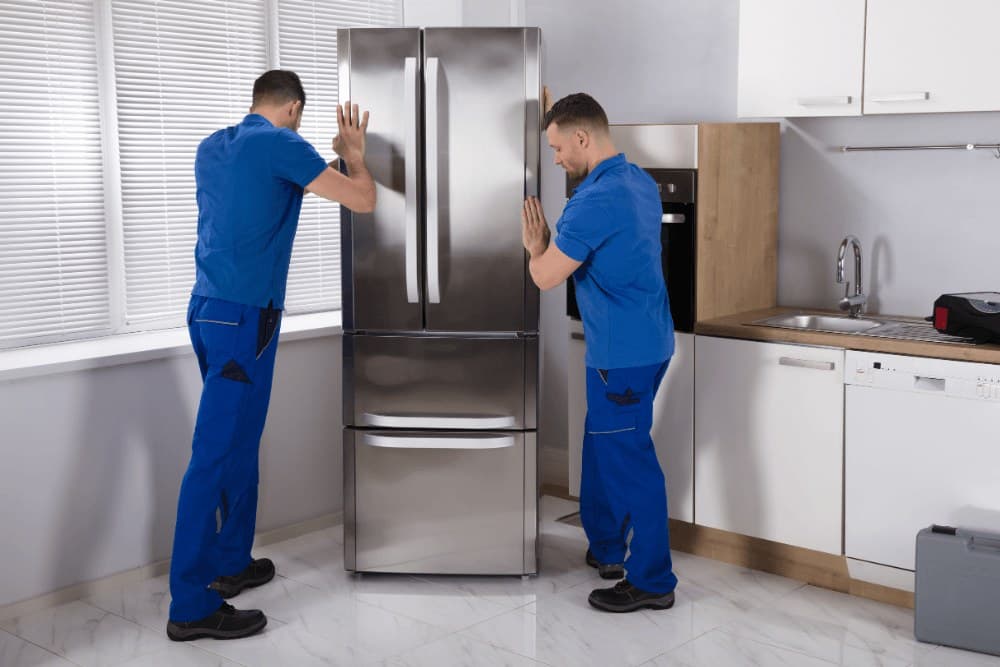
A dead fridge or a washing machine you're replacing doesn't just need to disappear — it needs to leave the building without wrecking a lift, and the refrigerant gas inside it needs handling properly, not vented into the air by whoever scraps it. We collect old appliances from villas and towers across Abu Dhabi, on their own or bundled with a new installation, and tell you upfront whether it's free or chargeable before anyone shows up.
What We Actually Take
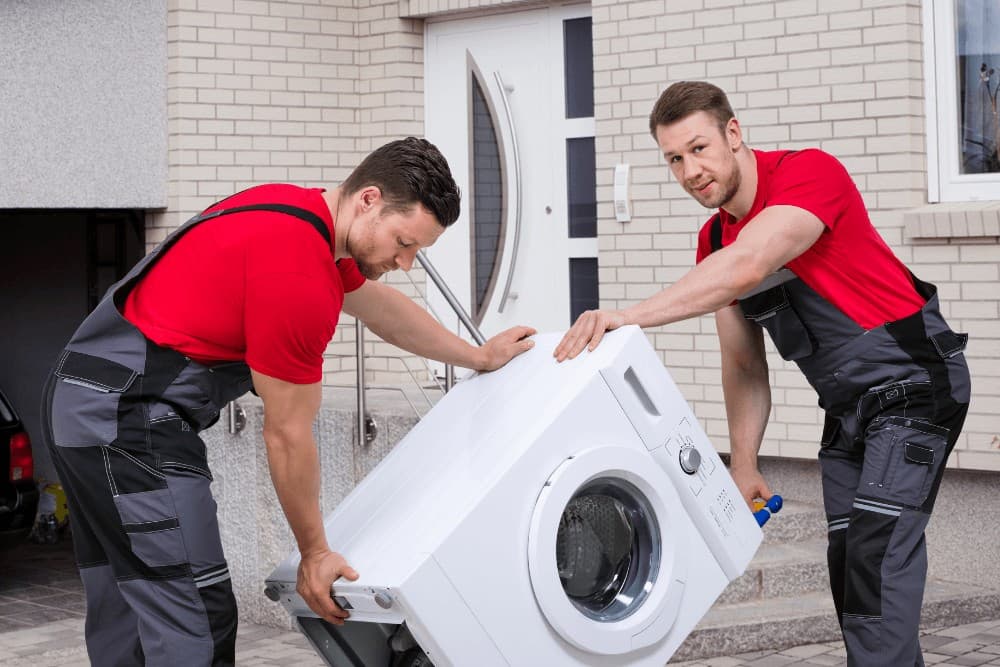
This is an appliance removal service, not a general junk-hauling company — every item on the list below is something our team knows how to disconnect, carry, and dispose of correctly, including the parts that aren't obvious from outside, like refrigerant in a fridge or AC unit or residual water in a washing machine drum.
- Refrigerators & freezers (single-door, side-by-side, American-style)
- Washing machines & dryers (front-load, top-load, stacked units)
- Dishwashers, built-in and freestanding
- Split & window air conditioning units
- Ovens, ranges, and cooktops (gas and electric)
- Water heaters and geysers
- Water dispensers, coolers, and RO/purifier systems
- Microwaves and small kitchen appliances (only when collected alongside a larger item)
If what you actually need is a working appliance fixed rather than an old one removed, our appliance repair pages cover diagnosis and pricing for washing machines, fridges, ACs, and ovens — this page is specifically about taking a unit away for good.
One thing worth clarifying upfront: "one appliance" means one unit, not one job. A washing machine and its matching dryer stacked in the same laundry nook count as two appliances for pricing purposes even though they're removed in a single visit, and a side-by-side fridge-freezer that splits into two separate cabinets on removal is priced as one unit if it was sold and installed as one. We'll clarify which applies to your setup when you describe what's being removed.
Is Old Appliance Removal Free?
Sometimes, yes — but "free appliance removal" isn't a blanket promise anyone can make honestly before seeing the job. It depends on what's being removed, how it's getting out of the building, and whether it's paired with other work. Here's what actually decides it.
Usually free or low-cost
You're booking a new installation at the same time
Removing the unit you're replacing is folded into the installation visit — one technician, one trip, no separate removal fee in most cases.
It's a common metal-bodied appliance
Fridges, washing machines, ACs, and ovens contain enough steel and copper that the scrap value can cover — or come close to covering — the cost of collecting and hauling it, especially in bulk.
Ground-floor or lift access is straightforward
A villa with driveway access or a tower unit with a working, bookable service lift keeps the job quick, which keeps the cost down or removes it entirely.
Usually a paid call-out
It's a standalone pickup, no new appliance involved
Without an installation job to pair it with, a removal-only visit has its own call-out and labor cost, even if the appliance itself has scrap value.
Multiple floors with no lift, or a difficult carry
A fridge down four flights of stairs, or through a villa's narrow service corridor, takes two people significantly longer than a ground-floor collection — that labor is priced in.
The unit still has refrigerant in it
A split AC or an older fridge/freezer with refrigerant that hasn't been recovered needs a proper decommissioning step before it can be scrapped, which is skilled work, not a straight loading job.
Large volume or commercial quantity
Ten washing machines from a serviced-apartment refit is a logistics job with a truck and a schedule, not a one-appliance pickup — priced per load, usually at a better per-unit rate than one-off collection.
We'll tell you which side of that line your job falls on when you call or book — usually within a couple of quick questions about the appliance, the floor, and whether a new one is going in — rather than quoting "free" up front and adjusting once a technician is already at your door.
How Removal Actually Works
Four steps, most of which happen before the truck arrives — the goal is that the actual pickup takes minutes, not that you're standing around while someone works out how to get a fridge past your building's fire door or figures out mid-carry that the door frame is narrower than the appliance.
- 1
Tell us what's being removed
Appliance type, roughly how old it is, whether it's still plugged in and connected, and whether a new one is replacing it. This is what decides whether it's a free pickup or a paid call-out, so it's worth being specific rather than just saying "an old fridge."
- 2
We confirm access before the day of pickup
Villa with a driveway, or a tower with a service lift? If it's a tower, we'll ask whether the building requires advance booking for the freight lift and factor that into the appointment time rather than discovering it on arrival.
- 3
Disconnection and safe removal
Water supply lines, gas connections, and power are disconnected properly — not yanked — and the unit is carried out without scraping walls or door frames along the way, which matters more in a shared building than most people expect.
- 4
The unit leaves with us, not left curbside
We don't drop appliances at the building's waste area for someone else to deal with. It goes on the truck and off-site the same visit, to a scrap or recycling point equipped to handle it — including refrigerant recovery where that applies.
Villa Removal vs. Apartment & Tower Removal
The appliance is identical either way — the logistics of getting it out of the building are not, and that's usually what determines timing more than anything else.
Villas
Usually the simpler case — a driveway or a side service gate gives a direct path from the kitchen or laundry room to the truck. The one thing worth flagging in advance is a narrow service gate or a tight staircase turn in a multi-storey villa, since a side-by-side fridge or a stacked washer-dryer unit sometimes needs to come apart or come out a different door than it went in.
If you're in a compound with shared security, a heads-up to the gate the morning of pickup avoids the truck being held up at the barrier.
Apartments & Towers
Most Abu Dhabi towers require the service or freight lift to be booked through building management, sometimes 24-48 hours ahead, and often only within specific hours. We ask about this when you book so the appointment lines up with when the lift is actually available, rather than a technician arriving and waiting on a booking that hasn't gone through yet.
Some buildings also require a gate pass or NOC for a contractor vehicle to enter the basement loading area — if yours does, let us know and we'll coordinate directly with your building's facilities team where possible.
What Happens to the Refrigerant Gas
This is the part most scrap collectors skip, and it's the reason a fridge, freezer, or split AC unit isn't just "metal to be scrapped" the way an old washing machine is.
Fridges and freezers run on a sealed refrigerant circuit — most commonly R134a in units sold over the last couple of decades. Split and window AC units use R22, R410A, or newer R32 depending on age. In all of these, the refrigerant is meant to stay inside a closed loop for the appliance's entire working life and only leave it through proper recovery equipment, not by puncturing the coil and letting it vent into the air — which is exactly what happens at a lot of informal scrap points, because recovery equipment costs money and cutting the metal apart doesn't.
The UAE is a signatory to the Montreal Protocol, the international agreement that governs the phase-down of ozone-depleting and high-warming refrigerants, and that commitment is why proper end-of-life handling of refrigerant-bearing appliances matters here specifically, not just as a general environmental nicety. When we take a fridge, freezer, or AC unit for scrap, the refrigerant is recovered before the metal casing is cut up — not vented, and not left to leak out in a scrap yard.
Practically, this is also the main reason refrigerant-bearing appliances are more often a paid removal than a washing machine or oven: recovering the gas properly takes equipment and a few extra minutes of skilled work, and that's priced in rather than skipped.
Does My Old Appliance Have Scrap Value?
Some do, and it's why appliance removal sometimes costs nothing even without a new installation attached. It's not a payout to you — it's what keeps a removal-only visit affordable, or free, instead of priced purely on labor.
| Appliance | Scrap value note |
|---|---|
| Washing machines & dryers | Steel drum and frame, plus a copper-wound motor — consistently one of the better scrap-value appliances. |
| Fridges & freezers | Steel body and compressor have value, offset somewhat by the cost of refrigerant recovery before scrapping. |
| Split & window AC units | The copper coil inside is the valuable part; the plastic casing and fan assembly aren't, and refrigerant recovery is a cost, not a value-add. |
| Ovens, ranges & cooktops | Mostly steel, moderate value; gas models have less wiring/copper than electric ones. |
| Water heaters | Steel tank with a copper heating element in most models — reasonable scrap value if the tank isn't badly corroded. |
| Microwaves & small appliances | Negligible scrap value individually — collected as an add-on to a larger pickup, not worth a dedicated trip. |
If you've had a scrap collector offer to take an old fridge or washing machine off your hands for free (or even pay a small amount for it), that offer is coming from this same scrap value — the difference is whether refrigerant gets recovered properly first, which most informal collectors skip entirely.
Still Working? Consider Donation Before Scrap
Not every "old" appliance is broken — a lot of what gets replaced is simply outdated or the wrong size for a new kitchen, not actually faulty. If yours still runs, scrapping it is the least useful thing that can happen to it.
Staff accommodation blocks, labor camps, and smaller household-help residences across Abu Dhabi regularly need basic working fridges, washing machines, and ovens, and several UAE charities and community donation drives accept used appliances in working condition on a case-by-case basis. If a unit you're replacing still runs and just isn't right for your new place, it's worth a quick call to a local charity or your building's community group before defaulting to a scrap pickup.
We're not a donation coordinator ourselves, and we don't store appliances awaiting pickup by a charity, so this isn't something we arrange directly — but if you tell us the unit is still functional when you book a removal, we'll say so plainly rather than defaulting straight to scrap, since that's a decision worth making deliberately rather than by default.
Municipal Bulk Collection vs. Booking a Pickup
Abu Dhabi and Dubai both run municipal bulk-waste collection programs that can take a single old appliance off your hands at no cost, and it's a genuinely reasonable option in the right circumstances — it's just not always the faster or more convenient one, which is the part that isn't always obvious upfront.
| Factor | Municipal collection | Booking with us |
|---|---|---|
| Cost | Free for eligible bulk household waste | Free to AED 250, depending on appliance and access |
| Timing | Scheduled collection, often several days out, fixed windows | Same-day in most cases, at a time you choose |
| Where it's collected from | Curbside or a designated collection point — you move it there yourself | Inside your unit — we carry it out |
| Refrigerant handling | Not guaranteed on general bulk waste collection | Recovered before scrapping, every time |
| Best for | No time pressure, able to move the item yourself, ground floor | Towers, upper floors, time-sensitive replacements, refrigerant-bearing units |
The municipal route generally expects you to get the appliance to a curbside or designated point yourself, on their schedule — straightforward for a ground-floor villa with time to spare, much less so from a 20th-floor apartment or when you need the space cleared today for a new delivery. It also doesn't guarantee refrigerant is recovered before the unit is processed, which matters for fridges, freezers, and AC units specifically. If your situation fits the municipal option better, we'd rather tell you that than book a paid visit you didn't need.
Replacing an Appliance? Bundle the Removal
If you're already booking us to install a new washing machine, water heater, AC unit, or water purifier, removing the old one is the same visit, not a second appointment to schedule around. One technician, one truck trip, and in most cases no separate removal fee — it's built into the installation price rather than quoted on top of it.
This also avoids the awkward in-between period a lot of people end up with: old fridge unplugged and sitting in the hallway for a week because the installer who fit the new one "doesn't do removals." We do both in the same visit specifically to avoid that.
Bulk & Commercial Appliance Removal
A hotel refurbishing a floor of rooms, a serviced-apartment operator replacing every unit's washing machine, or an office clearing out a pantry during a fit-out isn't a one-appliance job — and it's priced and scheduled differently.
Volume pricing
A per-unit rate on a bulk job is almost always lower than booking the same number of units as separate single pickups, since one truck trip and one access-coordination effort covers everything.
After-hours scheduling
Hotels and operating businesses usually need this done outside guest-facing hours or before a shift starts — we schedule bulk jobs around that rather than treating it like a standard daytime call-out.
One point of contact
For a multi-unit job, you deal with one coordinator for scheduling and invoicing rather than juggling separate bookings per appliance or per floor.
Staff accommodation and labor camp operators are a common version of this too — a block housing a few hundred workers typically runs dozens of shared washing machines and fridges across communal laundry and pantry areas, and those wear out on a schedule that has nothing to do with any one tenant's move-in or move-out date. Property management companies running multiple towers see the same pattern at smaller scale: appliances across several units reaching end-of-life around the same refurbishment cycle. Either way, the coordination need is the same — one contact, one schedule, one invoice, instead of treating every unit as its own separate job.
If this is you, call rather than book online — a quick walkthrough of quantity, appliance types, and site access lets us quote accurately instead of guessing.
What We Don't Take
Being upfront about the boundaries here saves everyone a wasted trip.
General furniture and household junk
We're an appliance removal service, not a full-house junk-clearance company. A sofa or a stack of boxes alongside a fridge isn't something we can take, even in the same trip.
Appliances already stripped for parts
A unit someone has already cut open for scrap, with wiring exposed or a punctured refrigerant line, is a safety hazard to transport and outside what we'll load without proper prior handling.
Construction debris or renovation waste
Tiles, drywall, cabinetry, and similar fit-out waste needs a licensed construction waste hauler, not an appliance removal visit.
Appliances buried behind other belongings
If the unit isn't reasonably accessible on the day (behind stored furniture, blocked by a locked door with no key on-site), we'll need to reschedule rather than force access.
Before We Arrive
None of this is mandatory — we'll handle whatever's left — but a few minutes of prep beforehand keeps the visit to its shortest possible length.
- Unplug the appliance and, if it's a washing machine or dishwasher, disconnect or turn off the water supply valve if you're comfortable doing so — otherwise we'll do it on arrival.
- Empty any remaining food from a fridge or freezer and let it defrost for a few hours beforehand — a fridge full of melting ice is a much slower, messier carry.
- Clear a path from the appliance to the door — we bring protective blankets for walls and doorframes, but a path free of obstacles keeps the visit quick.
- If it's in a tower, confirm whether you or building management need to book the service lift, and let us know the confirmed time slot.
- Have any relevant building gate pass or NOC ready if your compound or tower requires one for contractor vehicles.
- Keep pets secured elsewhere during the pickup — a fridge or washing machine coming through a doorway isn't the moment for a curious dog underfoot.
Removal Cost in Abu Dhabi
Every one of these ranges depends on the same handful of factors covered above — appliance type, access, and whether it's bundled with other work. Here's roughly where most jobs land.
| Job | Price | Note |
|---|---|---|
| Removal bundled with a new installation | Often free | Old unit removed as part of the installation visit |
| Single appliance, ground floor / villa | AED 0 – 100 | Depends on scrap value of the item |
| Single appliance, tower with lift access | AED 50 – 150 | Includes coordination with building service lift |
| Fridge, freezer, or AC unit (refrigerant recovery required) | AED 100 – 250 | Reflects the extra decommissioning step |
| No-lift multi-floor carry | AED 150 – 350 | Priced by floor count and appliance weight |
| Bulk / commercial removal (per unit, 5+ units) | Quoted on site visit | Volume rate, usually below single-item pricing |
Removal bundled with a new installation
Often free
Old unit removed as part of the installation visit
Single appliance, ground floor / villa
AED 0 – 100
Depends on scrap value of the item
Single appliance, tower with lift access
AED 50 – 150
Includes coordination with building service lift
Fridge, freezer, or AC unit (refrigerant recovery required)
AED 100 – 250
Reflects the extra decommissioning step
No-lift multi-floor carry
AED 150 – 350
Priced by floor count and appliance weight
Bulk / commercial removal (per unit, 5+ units)
Quoted on site visit
Volume rate, usually below single-item pricing
You'll know the price before we load anything
We confirm free-or-paid and the exact price over the phone or when you book, based on appliance type and access — never adjusted upward once the truck is at your door.
* Prices are in AED and are typical ranges for Abu Dhabi, inclusive of VAT where applicable. Your exact price is confirmed after we've heard the appliance type and access details.
Areas We Cover in Abu Dhabi
We collect old appliances from villas and towers across Abu Dhabi. Don't see your area listed? Call to confirm — we likely cover it.
How Booking Works
- 1
Call or book online
Tell us the appliance, roughly how old it is, and whether a new one's replacing it.
- 2
We confirm free or paid, and a time slot
Based on appliance type, floor access, and whether it's bundled with an installation.
- 3
The old unit leaves with us, same visit
Disconnected, carried out carefully, and taken for proper scrap or recycling — not left curbside.
Frequently Asked Questions
Is old appliance removal free in Abu Dhabi?
Where can I get rid of an old refrigerator?
How do I dispose of an old washing machine?
Do you take old appliances for free if I'm buying a new one?
What happens to the refrigerant gas when you remove a fridge or AC?
Can you remove an old fridge or washing machine from a high-rise apartment?
Do you pick up old AC units?
How much does it cost to remove an old refrigerator?
Do you remove old appliances for scrap?
Can you remove multiple appliances at once, like from a hotel renovation?
What appliances don't you take?
Can I get same-day removal of an old refrigerator?
Do you do general furniture and appliance removal together?
Do you take old appliances for recycling, not just scrap?
Do you remove old appliances with the water still connected?
Do you remove old appliances with the transport bolts still in?
Ready When You Are
Old appliance taking up space or blocking your new install? Book a pickup today.
Fixed price confirmed before any work starts. Licensed technicians, 90-day workmanship warranty.